Most forex brokers and prop firms treat social media like a checkbox. Post a chart. Share a market update. Maybe run a giveaway. Then wonder why their follower count stays flat and none of it turns into actual trader sign-ups.
The problem is not the platforms. It is the approach. Trading companies face a unique set of challenges on social media - strict compliance requirements, skeptical audiences, platform algorithms that bury financial content, and competitors who all look and sound exactly the same. Generic social media advice does not work here.
This guide covers how forex brokers and prop firms should actually approach social media in 2026 - from platform selection and content strategy to compliance, community building, and the production systems that make it all sustainable. Every recommendation comes from working directly with trading brands, not from theory.
Why Social Media Matters for Trading Brands in 2026
Paid advertising for trading companies is either restricted or prohibitively expensive. Google limits ads for leveraged financial products. Meta has tightened policies on forex and CFD advertising. TikTok bans financial services ads in most regions. The channels that other industries rely on for customer acquisition are either unavailable or cost $1,500 to $3,000 per depositing trader.
That leaves organic social media as one of the highest-leverage channels available. When done right, it does three things simultaneously. First, it builds brand awareness in a market where trust is everything. Traders research brokers and prop firms before they deposit - and their first stop is usually Instagram, YouTube, or X. If your social presence looks dead or generic, you have already lost them.
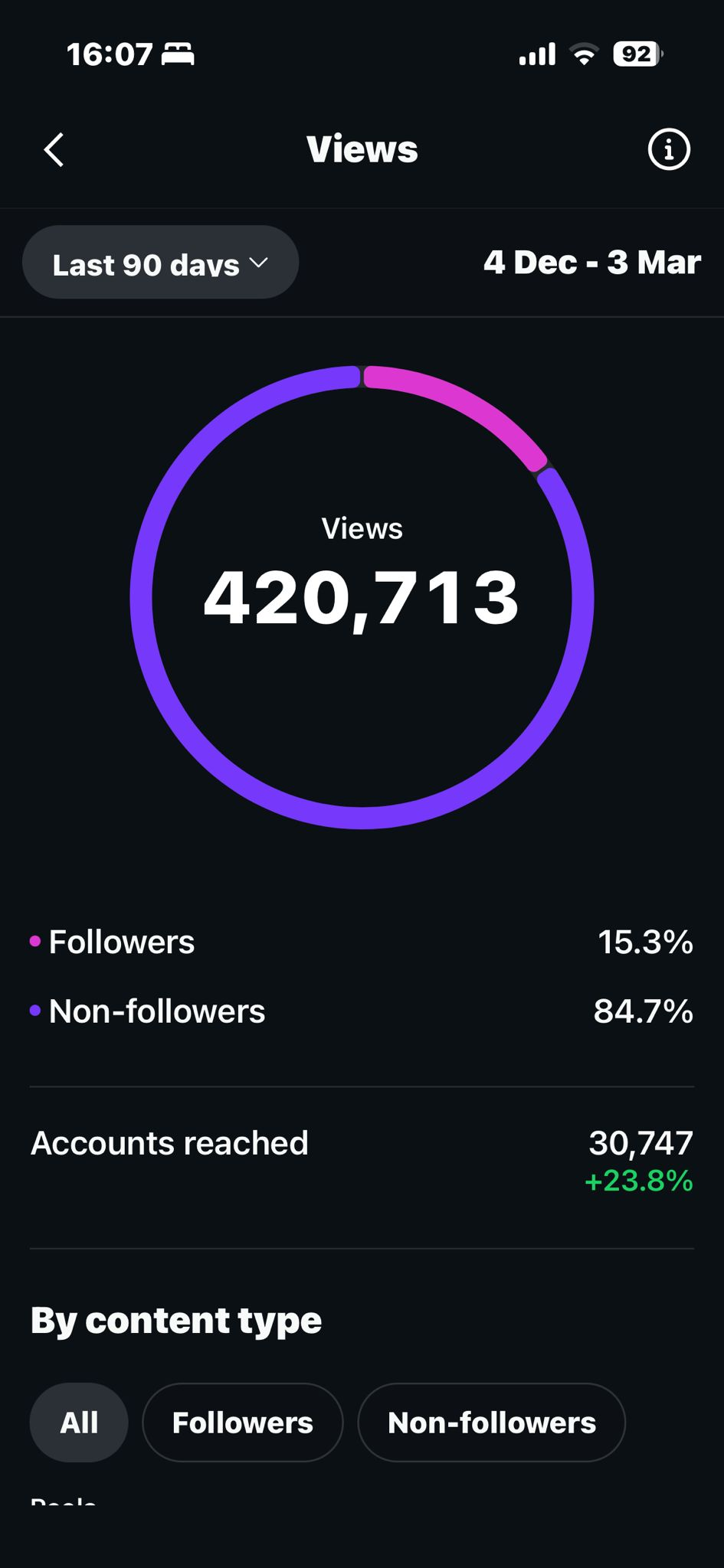
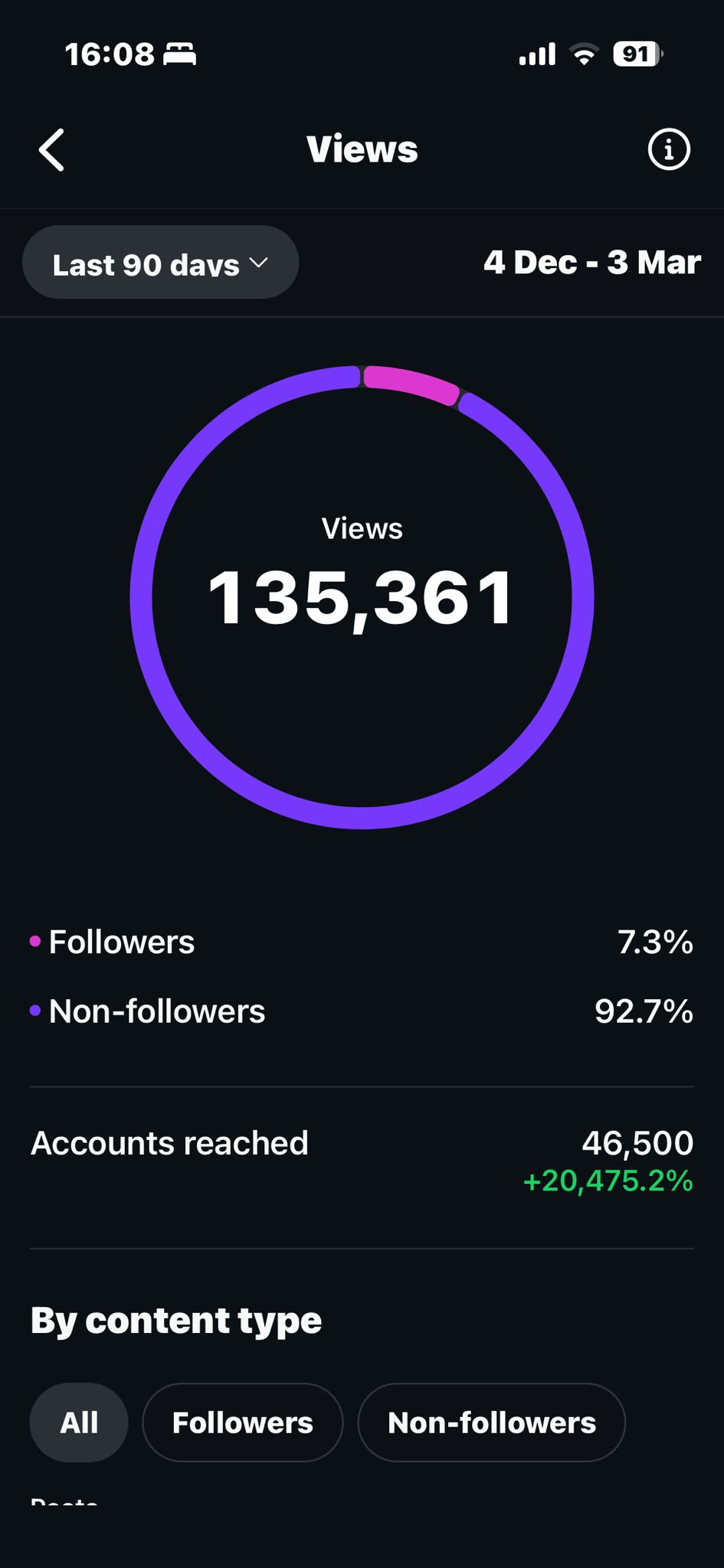
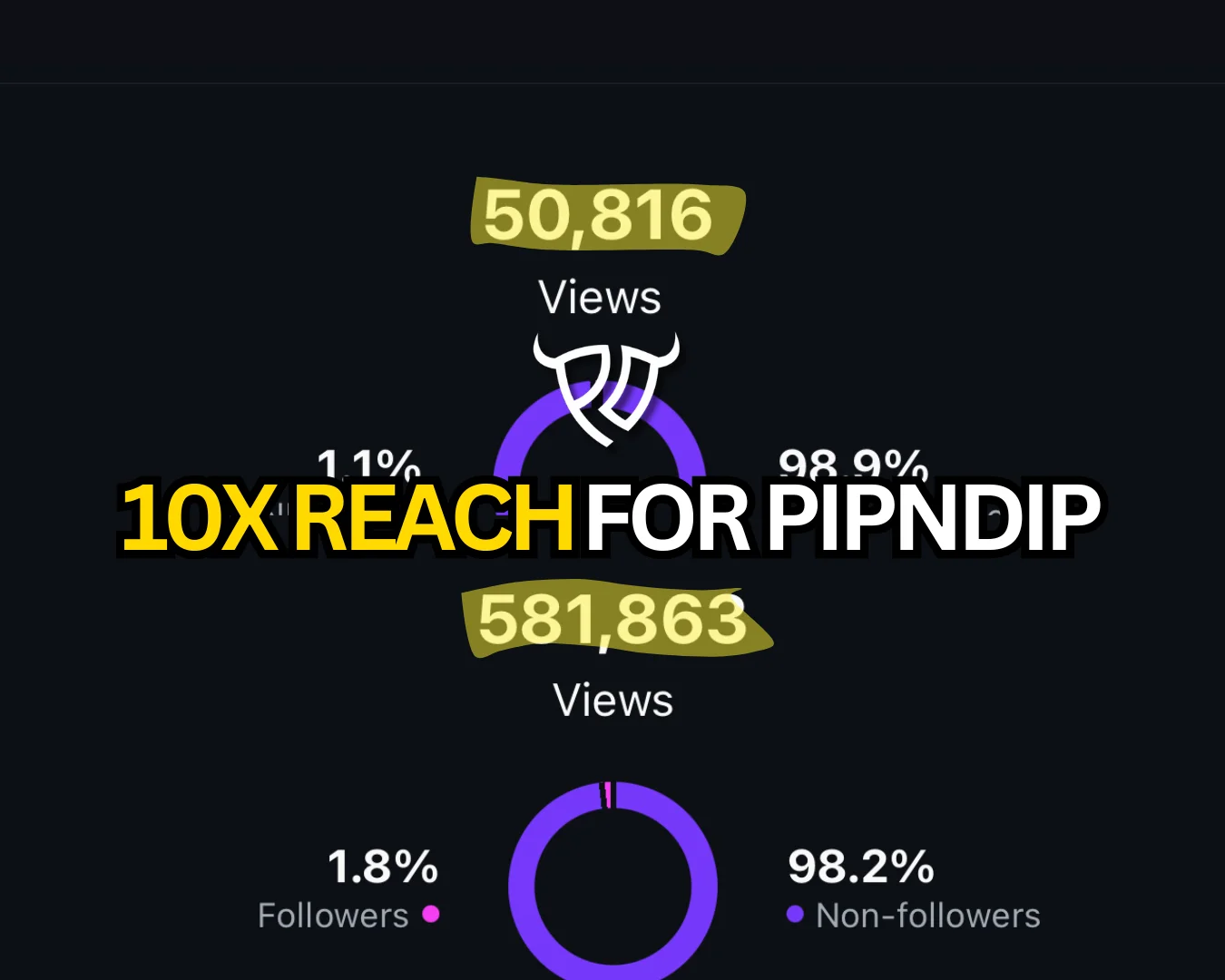
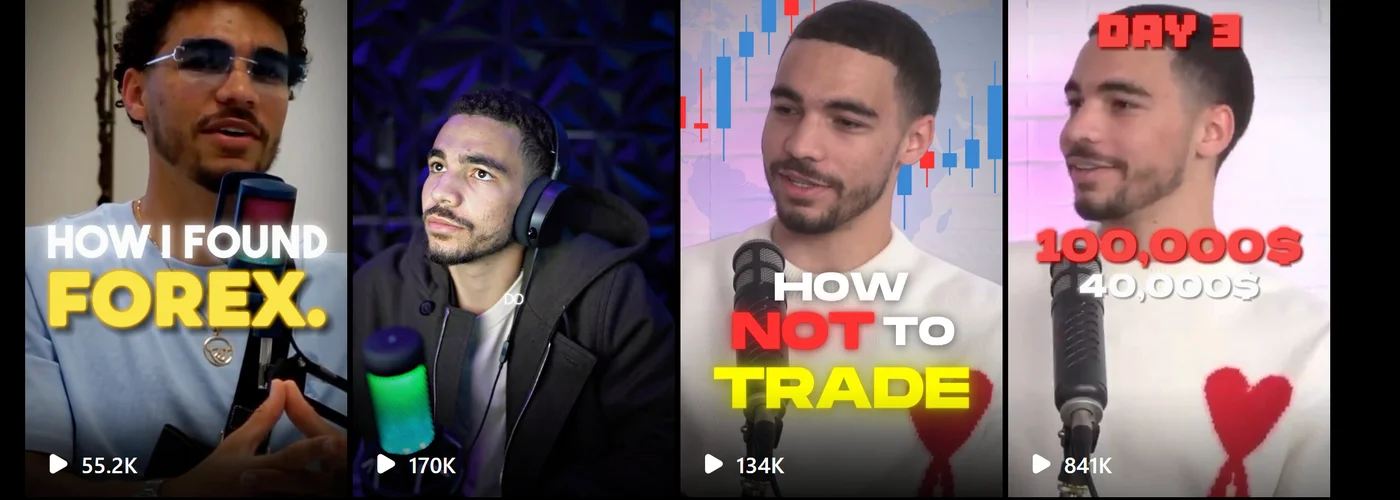
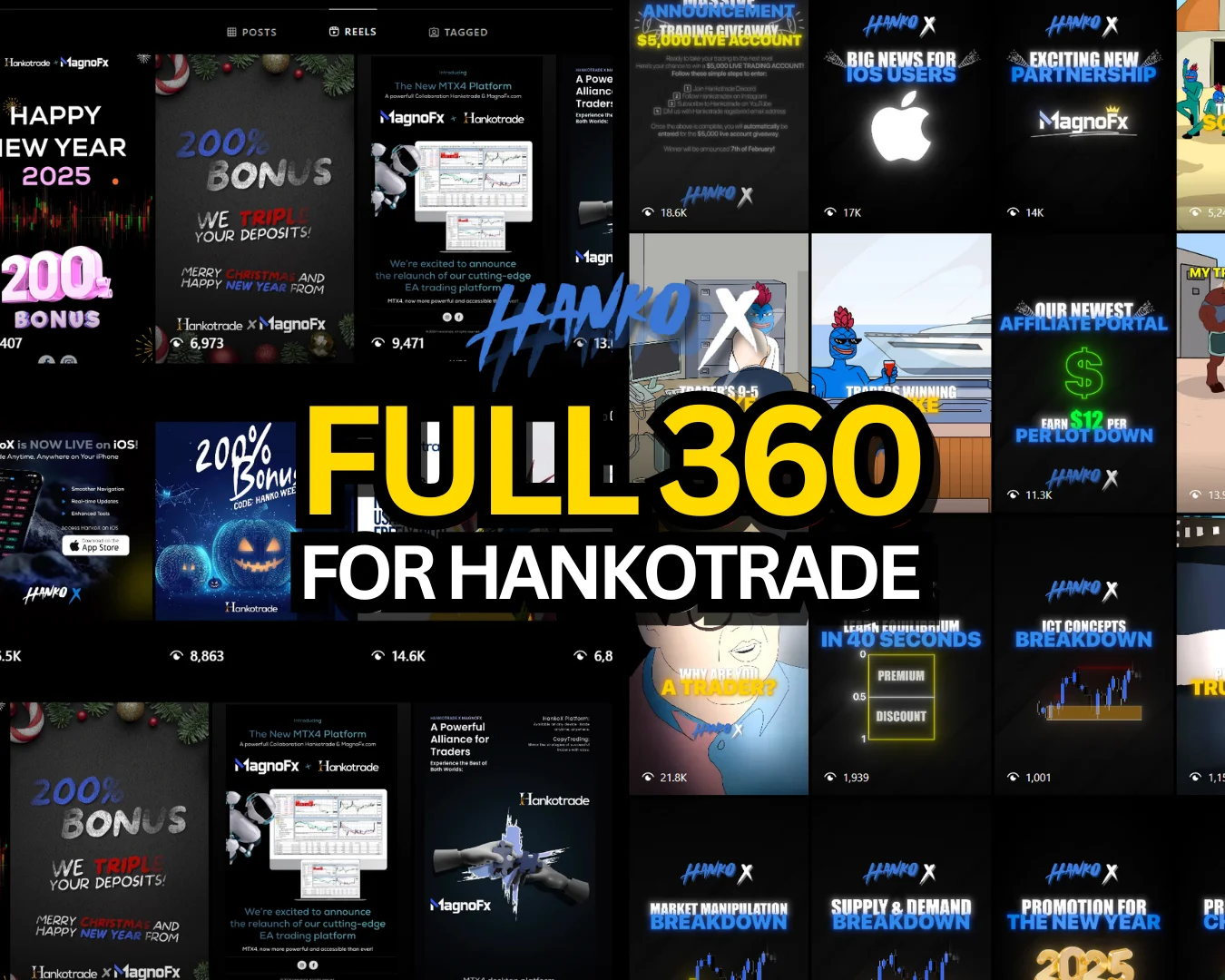
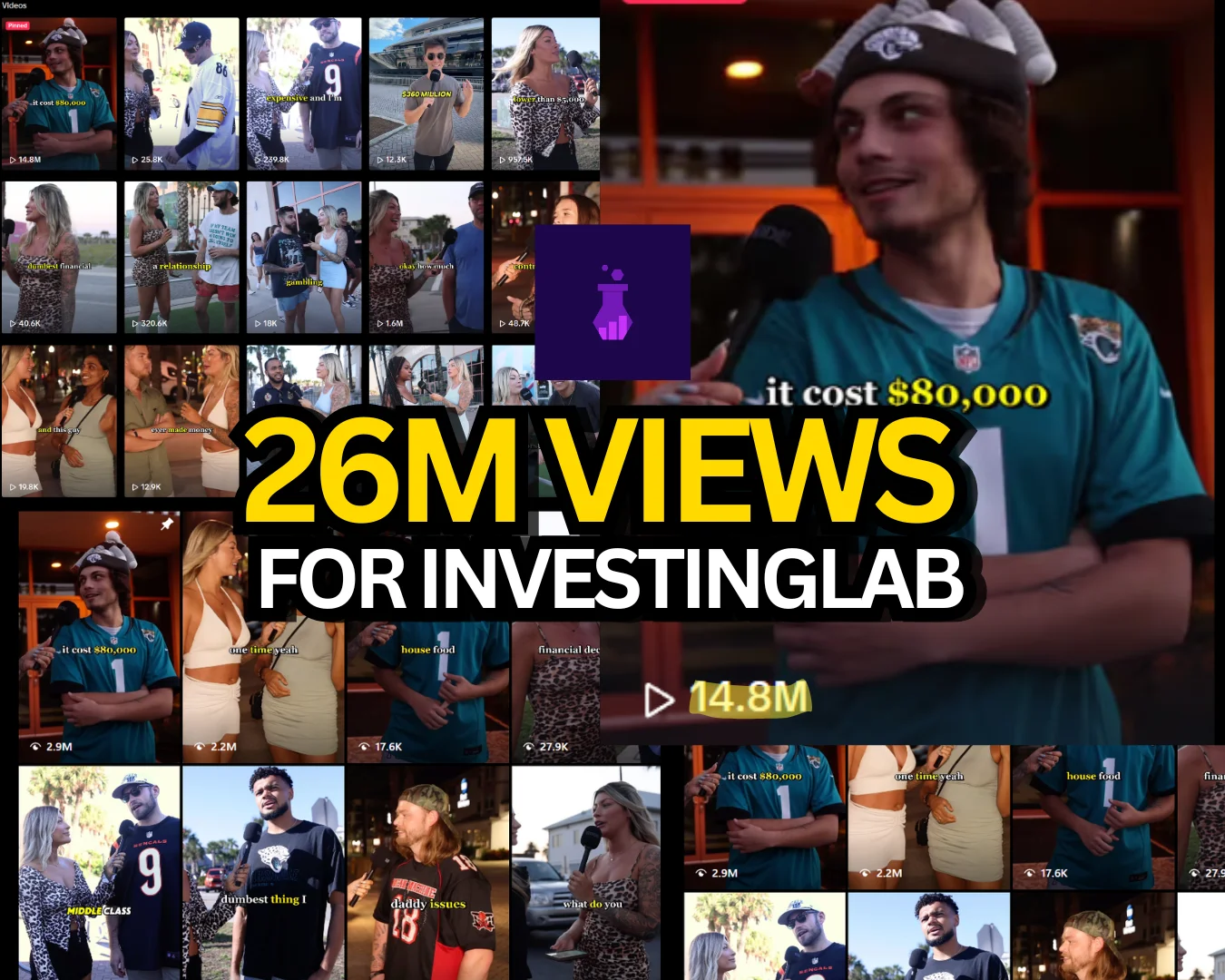
Second, social media drives direct acquisition. A single viral short-form video can generate more qualified sign-ups than a month of paid ads - at zero media cost. We have seen this happen repeatedly with trading brands. One client hit 1 million views across 4 videos. Another went from 2,000 to 20,000 followers in 90 days with zero ad spend.
Third, it creates a compounding asset. Every piece of content lives on. Every follower is a potential trader. Unlike paid ads where you pay per impression, a strong social media presence generates attention for free, indefinitely. For brokers and prop firms operating on tight marketing budgets, this makes organic social the highest-ROI channel available.
Platform Selection: Where Traders Actually Spend Time
Not every platform matters equally for trading brands. The mistake most brokers make is trying to be everywhere at once and doing all of it poorly. Pick two or three platforms and dominate them. Here is where traders actually spend time in 2026 and what each platform is best for.
Instagram is the primary discovery platform for retail traders, especially in the 18 to 35 age range. Reels drive reach. Carousels drive saves and shares. Stories drive engagement with your existing audience. For forex brokers, Instagram works best for brand building, educational content, and showcasing trader results. For prop firms, it is ideal for payout posts, challenge promotions, and funded trader spotlights.
The key metric here is not follower count - it is reach per post and profile visits. A broker with 5,000 engaged followers who converts 2% of profile visitors into sign-ups will outperform a broker with 50,000 ghost followers every single time.
YouTube
YouTube is the trust-building platform. Long-form content - market analysis, platform tutorials, trader interviews, educational series - builds deep credibility that no other platform can match. YouTube also has the longest content lifespan. A well-optimized video about "how to pass a prop firm challenge" will generate views and sign-ups for years.
YouTube Shorts now compete directly with TikTok and Reels for short-form discovery. The advantage is that Shorts viewers can easily find your long-form content, creating a natural funnel from awareness to trust to conversion.
TikTok
TikTok has the highest organic reach of any platform in 2026. A new account with zero followers can hit 100,000 views on its first video if the content is right. For trading brands, TikTok is a pure top-of-funnel play. It is excellent for reaching new audiences who have never heard of your brand. The content style is raw, fast, and personality-driven - polished corporate content dies here.
The challenge is conversion. TikTok audiences are younger and less likely to deposit immediately. Use TikTok for awareness and funnel them to Instagram or your website for conversion.
X (Twitter)
X is where serious traders live. Forex Twitter (FinTwit) is an active community of retail traders, analysts, and influencers. The content format is text-first - market takes, trade ideas, economic data reactions, and commentary. For brokers, X is the best platform for real-time market engagement and positioning your brand as an authority. For prop firms, it is great for announcing challenges, sharing payout milestones, and engaging with the funded trading community.
Telegram and Discord
These are not social media platforms in the traditional sense, but they are where trading communities actually live. We cover these in detail in the community building section below. Every broker and prop firm should have a presence on at least one of these.
Content Strategy for Forex Brokers
Forex brokers have a specific content challenge. You are marketing a platform and service - not a personality. That means your content needs to add value without relying on a single face or influencer. Here are the four content pillars that work.
Educational Content
This is your foundation. Tutorials, trading concepts, platform walkthroughs, and market mechanics. Topics like "How to read a candlestick chart," "What is leverage and how does it work," or "5 mistakes new forex traders make" perform consistently because there is always a new wave of beginner traders searching for this information. Educational content also positions your broker as a credible authority - not just another company trying to take deposits.
The key is making it specific to your platform. Do not just explain what a stop-loss is. Show how to set one on your platform, step by step. This turns educational content into product marketing without feeling like an ad.
Market Updates and Analysis
Daily or weekly market recaps, economic calendar previews, and trade idea breakdowns. This content has a short shelf life but drives high engagement because traders actively seek it out. The format matters - quick video breakdowns (60 to 90 seconds) outperform long written posts by 3 to 5x on engagement. Use charts, highlight key levels, and keep the language accessible.
Behind-the-Scenes and Brand Content
Show your team. Show your office. Show what it looks like to run a regulated brokerage. This content humanizes your brand and builds trust in an industry plagued by scam accusations. Traders want to know there are real people behind the platform. Team introductions, office tours, conference appearances, and "day in the life" content all perform well here.
Memes and Relatable Content
Trading memes are one of the most shared content types in the forex space. A well-timed meme about getting stopped out by 1 pip or watching NFP destroy your position gets shared across group chats, stories, and feeds. Memes drive reach. Reach drives brand awareness. Brand awareness drives sign-ups. The ratio should be roughly 70% value content, 20% brand content, and 10% memes and entertainment.
Want results like these for your brand?
Content Strategy for Prop Firms
Prop firms have a different content playbook than brokers. Your product is the challenge and the funded account. Your audience is aspirational - traders who want to prove themselves and trade with real capital. Everything in your content strategy should tap into that aspiration.
Challenge and Competition Content
New challenge announcements, pricing promotions, and rule explanations. This is your direct marketing content. Make it visually striking. Use countdown timers. Create urgency without being pushy. Show exactly what traders get - the account size, the profit split, the rules. Transparency wins in this space because so many prop firms have been vague about their terms.
Funded Trader Spotlights
Nothing converts better than showing real traders who passed your challenge and got funded. Feature their story, their strategy, their payout. Video testimonials are the gold standard. Screen-recorded payouts are proof that cannot be faked. This is social proof at its most powerful - every funded trader spotlight tells your audience "this could be you."
Payout Posts
Payout screenshots and announcements are the single highest-performing content type for prop firms on social media. A clean, branded payout graphic showing a trader receiving $5,000 or $15,000 or $50,000 stops the scroll immediately. Post these consistently - at least 3 to 5 per week if your volume supports it. Tag the trader. Let them share it. The organic amplification from payout posts is massive.
Educational and Strategy Content
Teach traders how to pass your challenge. Risk management rules, strategy breakdowns, psychology tips. This seems counterintuitive - why help people pass? Because it builds trust, positions you as a legitimate firm, and creates content that ranks for high-intent search terms like "how to pass [your firm name] challenge." Every trader who finds that content is a potential customer.
Short-Form vs Long-Form: What Works and When
The debate between short-form and long-form content is a false choice. They serve different purposes in your funnel and you need both.
Short-form (under 90 seconds) is your discovery engine. Reels, TikToks, YouTube Shorts, and X video clips reach people who have never heard of your brand. The goal is not to sell - it is to get attention and drive profile visits. Short-form content should be fast-paced, hook-driven, and deliver value in the first 3 seconds. For trading brands, the best-performing short-form formats are: quick trade breakdowns, market reaction clips, "one thing I wish I knew" advice, and payout reveals.
Long-form (5 to 20 minutes) is your trust engine. YouTube videos, podcast episodes, and in-depth analysis build the credibility that converts viewers into traders. Someone who watches a 15-minute platform tutorial is 10x more likely to sign up than someone who watched a 30-second Reel. Long-form also has a significantly longer lifespan - a quality YouTube video generates views for 12 to 24 months, while a Reel peaks in 48 hours.
The ideal system uses short-form to drive discovery and long-form to drive conversion. Post short-form content 5 to 7 times per week. Post long-form content 1 to 2 times per week. Repurpose long-form into short-form clips to maximize output without doubling production effort.
Compliance and Regulatory Considerations
Social media compliance is where most trading brands get nervous - and where many get it wrong. The rules are strict, but they are not complicated if you build the right systems.
Risk Disclaimers
Every post that could be construed as financial promotion needs a risk disclaimer. For regulated brokers, this means including your loss percentage for retail accounts (e.g., "76% of retail investor accounts lose money when trading CFDs with this provider"). On Instagram and TikTok, this typically goes in the caption. On YouTube, it goes in the description and as a pinned comment. On X, use a reply thread.
For prop firms, the requirements are different but equally important. You cannot guarantee profits. You cannot imply that funded trading is easy money. Every payout post should include context about the fact that not all traders pass the challenge.
No Profit Guarantees
This is the most common violation we see. Phrases like "make money trading," "earn from home," "financial freedom," or "guaranteed returns" are off-limits. Even implied guarantees - like showing a luxurious lifestyle alongside trading content - can trigger regulatory action. Keep your language factual. Show results, but always with appropriate context and disclaimers.
Platform-Specific Policies
Beyond regulatory compliance, each social media platform has its own rules for financial content. Instagram and Facebook restrict ads for financial products but allow organic content with disclaimers. TikTok has banned paid financial advertising in most markets but allows organic educational content. YouTube permits financial content but may age-restrict or limit distribution for content that looks like investment advice.
Build a compliance checklist for every piece of content before it goes live. Include: risk disclaimer present, no profit guarantees, no misleading claims, appropriate targeting, and platform policy compliance. This takes 30 seconds per post and saves you from fines that can run into six figures.
Community Building: Telegram and Discord for Trading Brands
The most valuable asset a trading brand can build on social media is not a follower count - it is a community. Telegram and Discord are where trading communities thrive, and they offer something no public social platform can: direct, ongoing access to your most engaged users.
Telegram for Brokers and Prop Firms
Telegram is the dominant messaging platform in the forex space, especially in Asia, the Middle East, and Africa. A well-run Telegram group or channel gives you a direct line to traders that bypasses algorithms entirely. Use it for market alerts, exclusive content, challenge announcements, and community discussion.
The structure that works best: one broadcast channel for announcements (one-way), and one community group for discussion (two-way). The channel pushes content. The group builds relationships. Keep the group moderated - remove spam, answer questions, and foster genuine conversation. A 2,000-member Telegram group with high engagement will drive more sign-ups than a 50,000-follower Instagram page with dead engagement.
Discord for Prop Firms
Discord is particularly effective for prop firms because of its server structure. You can create channels for different topics - general discussion, trade ideas, challenge support, funded trader lounge, announcements. This organization keeps conversations focused and makes the community feel more structured and professional.
The "funded trader lounge" concept is especially powerful. Create a private channel that only funded traders can access. This becomes an aspirational goal for challenge participants and creates a natural hierarchy within your community. Funded traders become your best ambassadors - they recruit new challenge participants just by being visible and active.
Community Metrics That Matter
Do not measure community success by member count alone. Track daily active users, messages per day, member-to-sign-up conversion rate, and retention (how many members are still active after 30 and 90 days). A healthy trading community converts 3% to 8% of active members into paying customers - whether that is deposits for brokers or challenge purchases for prop firms.
Want results like these for your brand?
Measuring What Matters: KPIs Beyond Vanity Metrics
Likes, followers, and impressions are nice. But they do not pay for your marketing department. The social media KPIs that actually matter for trading brands are the ones tied to revenue.
Acquisition Metrics
Track sign-ups attributed to social media. Use UTM parameters on every link in your bio, stories, and posts. Set up proper attribution in your CRM so you can see exactly how many registrations, KYC completions, and first-time deposits (FTDs) came from each platform. This is the number your CEO and CFO care about - not your follower growth rate.
For prop firms, track challenge purchases attributed to social media. For brokers, track FTDs. These are the only metrics that justify continued investment in social media marketing.
Engagement Quality Metrics
Not all engagement is equal. A save or share is worth 5x more than a like in terms of algorithmic reach and intent signal. Track saves per post, shares per post, comments that indicate purchase intent ("How do I sign up?" or "What are your spreads?"), and DM inquiries. These engagement signals tell you which content is actually moving people toward becoming customers.
Content Performance Metrics
For every piece of content, track reach, engagement rate, profile visits generated, and link clicks. Build a content performance dashboard that shows you which content types, topics, and formats drive the most downstream conversions - not just the most views. A video with 10,000 views that generates 50 sign-ups is infinitely more valuable than a video with 500,000 views that generates zero.
Cost Metrics
Calculate your cost per acquisition from social media by dividing your total social media spend (team, tools, production) by the number of FTDs or challenge purchases attributed to social. Compare this to your paid advertising CPA. In most cases, organic social media delivers a CPA that is 60% to 80% lower than paid channels for trading brands - which makes it one of the most capital-efficient marketing channels available.
The Content Production System
Knowing what to post is only half the battle. The other half is building a system that produces content consistently without burning out your team. Most trading brands fail at social media not because they lack ideas, but because they lack a production system.
Scripting
Every piece of content starts with a script or outline. Even "casual" short-form videos need a hook, a body, and a call to action written out before filming. Batch your scripting. Spend one session per week writing scripts for the next 7 to 10 pieces of content. Use a simple framework: hook (first 3 seconds), value delivery (10 to 60 seconds), and CTA (last 5 seconds).
For trading content specifically, pull script ideas from three sources: trending market topics (what is happening this week), evergreen education (concepts that are always relevant), and audience questions (what are your traders actually asking in DMs and comments).
Filming and Editing
Batch your filming as well. Record 5 to 10 short-form videos in one filming session. This is more efficient and creates visual consistency across your content. For editing, establish templates - intro animations, lower thirds, caption styles, color grading presets - so your editor can produce content faster without sacrificing quality.
For trading brands, invest in screen recording capability. Platform tutorials, chart analysis, and trade breakdowns all require clean screen captures. Tools like OBS for recording and CapCut or Premiere Pro for editing are the standard stack.
Scheduling and Publishing
Use a scheduling tool to maintain consistency. Post at the same times on the same days every week. For trading content, the best posting times align with market sessions - early London session (7 to 9 AM GMT) and early New York session (1 to 3 PM GMT) capture traders when they are most active and engaged.
The minimum viable posting schedule for a trading brand is: 5 short-form posts per week, 2 feed posts or carousels per week, daily stories, and 1 long-form video per week. This is enough to stay visible in algorithms and build momentum. Scale up from there based on results and capacity.
The Team You Need
A basic social media team for a trading brand requires: one content strategist (plans what to post and writes scripts), one videographer/editor (films and edits), one community manager (responds to comments, DMs, and manages Telegram/Discord), and one analyst (tracks performance and attribution). This can be in-house, outsourced to an agency like AIM, or a combination of both.
Why Most Brokerages Get Social Media Wrong (and How to Fix It)
After working with dozens of trading brands, the same mistakes come up again and again. Here are the most common ones and how to fix them.
Mistake 1: Corporate Content on Casual Platforms
Posting polished corporate graphics on Instagram Reels or TikTok kills your reach instantly. These platforms reward authentic, personality-driven content - not brand guidelines. Your social media content should feel like it was made by a trader, not a marketing department. Use real people, real screens, real reactions. Save the corporate design for your website and email campaigns.
Mistake 2: No Attribution System
If you cannot track which sign-ups came from social media, you cannot justify the investment. Most brokers have zero attribution between social media and FTDs. Fix this by implementing UTM tracking on every link, setting up conversion events in your CRM, and building a weekly report that ties social media activity to revenue outcomes.
Mistake 3: Ignoring Community
Posting content and never responding to comments or DMs tells your audience you do not care. Social media is social. Respond to every comment within 2 hours. Answer every DM within 24 hours. The brands that build the strongest trader communities are the ones that show up in the comments, not just in the feed.
Mistake 4: Inconsistency
Posting 10 times one week and then going silent for two weeks is worse than posting 3 times every week consistently. Algorithms reward consistency. Your audience expects consistency. Build a system you can sustain, not one that burns your team out after a month.
Mistake 5: Copying Competitors
Every forex broker posts the same gold chart with the same technical analysis. Every prop firm posts the same "we just paid out $100K this month" graphic. When everyone looks the same, no one stands out. Find your angle. Maybe it is humor. Maybe it is radical transparency. Maybe it is a specific niche within trading. Whatever it is, it needs to be distinctly yours.
Social media marketing for trading brands only works when you treat it as a revenue channel with a real production system - not an afterthought handed to a junior hire with a Canva account.
Ready to build a marketing engine that actually generates revenue?
Read more: Forex Broker Marketing Guide - Marketing for Trading Influencers