Affiliate and introducing broker (IB) programs drive more new client acquisitions for forex brokerages than any other single channel. Industry data shows that 50% to 70% of new retail trading accounts at mid-size brokerages come through affiliate and IB referrals. Yet most brokerages treat their partner programs as an afterthought - a page on the website, a generic commission structure, and a hope that partners will figure it out themselves.
That approach worked in 2015. It does not work now. The affiliate landscape for forex brokers has become fiercely competitive. Top-producing affiliates and IBs have their pick of dozens of brokerages offering partnerships. They choose based on commission structures, tracking reliability, content support, payment speed, and - most importantly - how well the brokerage helps them succeed.
This guide covers everything a forex brokerage needs to build, manage, and scale an affiliate and IB program that attracts quality partners and turns them into a predictable growth engine. From infrastructure and recruitment to compliance and performance measurement - based on what we have seen work across real brokerage partner programs.
Why Affiliate and IB Programs Are the Growth Engine for Brokerages
Paid advertising for forex brokerages is expensive, heavily regulated, and increasingly restricted. Google limits financial product ads. Meta restricts CFD and forex promotion. TikTok bans it outright in most markets. The cost per acquisition through paid channels for a funded forex trading account ranges from $500 to $3,000 depending on the jurisdiction and product type.
Affiliate and IB programs flip this equation. Instead of paying upfront for clicks that may never convert, you pay partners after they deliver real results - verified accounts, funded traders, and active volume. The risk shifts from the brokerage to the partner, and the economics become dramatically more favorable.
There are several reasons why partner programs outperform other channels for forex brokerages:
- Performance-based cost structure. You only pay when a partner delivers a qualified action - a deposit, a trade, or ongoing volume. No wasted spend on impressions or clicks that go nowhere.
- Built-in trust transfer. When a trading educator, analyst, or financial content creator recommends your brokerage to their audience, the trust they have built transfers to you. This produces higher conversion rates and better client lifetime value than cold traffic.
- Geographic reach without infrastructure. A strong IB network gives you client acquisition in markets where you have no physical presence, no local team, and no local advertising budget. IBs in Southeast Asia, Latin America, the Middle East, and Africa can open entire regions for you.
- Compounding returns. Unlike paid ads that stop the moment you stop spending, a healthy affiliate network compounds over time. Each new partner adds ongoing acquisition capacity. Each piece of content they create continues to generate referrals for months or years.
The brokerages that dominate client acquisition in 2026 are the ones that treat their affiliate and IB programs as core business units - not side projects. They invest in infrastructure, dedicate teams, and build systems that make it easy for partners to refer and earn.

Affiliate vs IB vs Revenue Share: Understanding the Models
Before building your program, you need to understand the different partnership models and when to use each one. Most brokerages offer a combination, but the structure matters because it determines what type of partners you attract and how they behave.
CPA (Cost Per Acquisition)
CPA pays a flat fee for each qualified action - typically a first-time deposit (FTD) above a minimum threshold. Common CPA rates in forex range from $200 to $1,500 per FTD, depending on the target country, deposit minimum, and the quality of the traffic source.
CPA works best for affiliates who drive high-volume traffic through content sites, comparison pages, SEO, or paid media. It gives them predictable income per referral. The risk for the brokerage is that CPA partners are incentivized to drive quantity over quality - they get paid the same whether the trader deposits $250 and churns in a week, or deposits $10,000 and trades for years.
Revenue Share
Revenue share pays the partner a percentage of the net revenue generated by their referred traders - typically 20% to 50% of net spread or commission revenue. This aligns partner incentives with brokerage profitability. Partners earn more when they refer traders who trade actively over long periods.
Revenue share attracts partners who think long-term. Trading educators, signal providers, and community leaders prefer this model because it creates recurring passive income. The downside is that new partners may be reluctant to accept revenue share alone because it takes time to build up meaningful earnings.
Hybrid Model
The hybrid model combines a smaller CPA payment with ongoing revenue share - for example, $300 CPA plus 15% revenue share. This is the most popular structure in 2026 because it gives partners immediate compensation while also rewarding long-term quality.
Hybrid structures are the sweet spot for most brokerages. They attract a wider range of partners, reduce the risk of low-quality referrals, and create alignment between partner earnings and brokerage revenue.
Sub-IB (Multi-Tier)
Sub-IB structures allow your top partners to recruit their own sub-partners and earn a commission override on their referrals - usually 5% to 15% of the sub-partner's earnings. This turns your best IBs into recruiters who expand your network without any direct effort from your team.
Sub-IB programs are especially powerful in regions like Southeast Asia, the Middle East, and Africa where personal networks drive business. A strong IB in Malaysia who recruits 20 sub-IBs effectively becomes a regional distribution channel for your brokerage.
The best affiliate programs do not force partners into a single model. They offer flexibility - CPA for traffic affiliates, revenue share for educators, hybrid for everyone in between. Let the partner choose the structure that fits their business.
Building Your Affiliate Program Infrastructure
Your affiliate program is only as good as the technology behind it. Partners need reliable tracking, real-time reporting, and fast payments. If any of these break, your best partners will move to a competitor who does it better.
Tracking Platform
You need a dedicated affiliate tracking platform that integrates with your CRM and trading platform. The industry standards include Cellxpert, Affise, FYNXT, and custom-built solutions on top of platforms like HasOffers (TUNE). Your tracking system must handle:
- Multi-touch attribution. Traders often interact with multiple partners before converting. Your system needs to handle first-click, last-click, and weighted attribution models.
- Sub-ID tracking. Partners need to tag their traffic sources (YouTube, Instagram, blog, email) to understand which channels perform. Without sub-ID support, they are flying blind.
- Postback and API integration. Real-time conversion data must flow from your trading platform to the affiliate dashboard. Delays or discrepancies destroy partner trust.
- Fraud detection. Built-in tools to flag suspicious patterns - duplicate accounts, self-referrals, incentivized signups, and multi-accounting.
Partner Dashboard
Your affiliate dashboard is the primary interface between your brokerage and your partners. It should show real-time stats - clicks, registrations, FTDs, deposits, trading volume, and earned commissions. Partners check their dashboards daily. If the data is delayed, inaccurate, or hard to read, they lose confidence in your program.
The dashboard should also house marketing materials (banners, landing pages, email templates), tracking link generators, payment history, and direct communication with their account manager. The best dashboards include performance benchmarks so partners can see how they compare to program averages.
Payment Systems
Pay your partners on time. Every time. Without excuses. This is the single biggest factor in partner retention. The industry standard is monthly payments with net-15 or net-30 terms, but the brokerages winning the affiliate game are moving to bi-weekly or even weekly payments for top producers.
Support multiple payment methods - bank wire, Skrill, Neteller, crypto (USDT), and regional payment solutions. Many IBs in emerging markets prefer local payment methods. If you only offer bank wires with $50 fees, you will lose partners whose monthly earnings are $200-$500.
Want results like these for your brand?
Recruiting Quality Affiliates and IBs
The hardest part of running an affiliate program is not the technology or the commission structure. It is finding and recruiting quality partners who will actually produce results. Most brokerages list their affiliate program on their website and wait. That is not a recruitment strategy - that is a prayer.
Where to Find High-Quality Partners
- Trading educators and course creators. These are the highest-value affiliate partners in forex. They have built audiences of aspiring and active traders who trust their recommendations. Find them on YouTube, Instagram, TikTok, and through trading communities.
- Financial comparison and review sites. Sites like ForexPeaceArmy, FXEmpire, BrokerChooser, and regional equivalents drive significant search traffic. They typically work on CPA or hybrid models and can deliver consistent volume.
- Signal providers and copy trading platforms. Signal providers need their followers to be on a specific broker. This creates a natural alignment where the signal provider becomes an IB, and every new follower becomes a referred trader.
- Regional IBs with local networks. In markets like Nigeria, Indonesia, Thailand, Egypt, and Brazil, local IBs with on-the-ground presence and personal networks outperform any digital marketing channel. Find them through industry events, forex expos, and regional forums.
- Fintech and trading tool developers. Developers who build EAs, indicators, or trading tools often have large user bases. Partnership deals where their users get preferred access through your brokerage can drive high-quality, active traders.
What Top Partners Look For
Before you recruit, understand what makes a brokerage attractive to top-producing affiliates:
- Competitive and flexible commissions - not just high payouts, but structures that match their business model
- Reliable tracking and reporting - real-time, accurate, with sub-ID support
- Fast payments - on time, every time, with low minimum thresholds
- Dedicated account manager - a real person who responds quickly and solves problems
- Marketing support - custom landing pages, co-branded materials, exclusive promotions for their audience
- Strong brand and regulation - partners risk their reputation by recommending you. They need to trust your brand, your licensing, and your client treatment
Onboarding That Sets Partners Up for Success
Recruitment without proper onboarding is wasted effort. Within the first 48 hours of a new partner joining, they should receive:
- A welcome call with their dedicated account manager to understand their audience, traffic sources, and goals
- Custom tracking links and landing pages tailored to their audience
- A partner starter kit with banners, email templates, social media content, and product one-pagers
- Dashboard walkthrough showing how to track performance, generate links, and access payments
- Commission structure confirmation in writing, including payment schedule and terms
The first 30 days determine whether a partner becomes active or goes dormant. At AIM, we have seen that partners who receive a structured onboarding with a dedicated point of contact are 3x more likely to produce their first referral within 14 days compared to those who receive a generic welcome email.
Commission Structures That Actually Attract Top Partners
Your commission structure is your value proposition to partners. Get it wrong and you attract low-quality traffic. Get it right and you build a network of partners who treat your brokerage as their primary recommendation.
Competitive Benchmarks (2026)
Here is what the market looks like right now for forex broker affiliate programs:
- CPA: $200-$400 for Tier 2/3 countries, $500-$1,000 for Tier 1 (UK, Australia, EU), up to $1,500 for high-deposit-minimum accounts
- Revenue share: 25-40% of net revenue is standard, 45-55% for top producers
- Hybrid: $200-$500 CPA + 10-20% revenue share is the most common structure
- Sub-IB override: 5-10% of sub-partner earnings, sometimes tiered by sub-partner volume
Tiered Structures
The most effective affiliate programs use tiered commission structures that reward performance. This creates an incentive for partners to increase their output and makes your program sticky - once a partner reaches a higher tier, they are unlikely to switch to a competitor where they start at the base level.
Example of a tiered CPA structure:
- Bronze (0-10 FTDs/month): $300 per FTD
- Silver (11-30 FTDs/month): $450 per FTD
- Gold (31-75 FTDs/month): $600 per FTD
- Platinum (76+ FTDs/month): $800 per FTD + dedicated support
The same principle applies to revenue share tiers. A partner generating $50K+ in net revenue per month should earn a higher percentage than one generating $5K. This is not just about rewarding volume - it is about retaining the partners who matter most to your business.
Custom Deals for Top Producers
Your top 5% of partners will generate 50%+ of your affiliate revenue. These partners deserve custom commission structures negotiated directly. This might include higher CPA rates, elevated revenue share percentages, guaranteed minimum payments, co-marketing budgets, or exclusive promotions they can offer their audience.
Do not wait for top producers to ask for better terms. Proactively reach out when a partner hits performance milestones and offer upgrades. This signals that you value the relationship and reduces the chance of them being poached by a competitor.
Managing and Retaining Your Affiliate Network
Recruiting partners is only half the job. The other half - and arguably the harder half - is keeping them active, motivated, and loyal. Most affiliate programs have an activation rate below 20%, meaning 80% of registered partners never produce a single referral. The brokerages that win are the ones that push this number to 35-40%.
Dedicated Account Management
Every active partner should have a named account manager they can contact directly. Not a support ticket system. Not a generic email address. A real person on WhatsApp or Telegram who responds within hours, not days.
Account managers should proactively reach out to partners - not just when there is a problem, but to share performance insights, suggest optimization strategies, and flag new opportunities. A monthly performance review call with your top 20 partners will do more for retention than any commission increase.
Content and Marketing Support
Most partners struggle with content creation. They know their audience, but they do not have designers, copywriters, or marketing teams. Brokerages that provide ready-to-use marketing materials get significantly more promotion from their partners.
This includes:
- Custom landing pages for each partner or partner segment
- Banner ads in multiple sizes and languages
- Social media content - posts, stories, reels templates
- Email templates partners can send to their lists
- Educational content - webinar recordings, market analysis, trading guides they can share
- Co-branded materials featuring both the brokerage and partner brands
Co-Marketing Campaigns
For your top partners, go beyond providing materials. Run co-marketing campaigns where you jointly fund and execute promotions. This could be a webinar series hosted by the partner with your brokerage's platform showcase, a trading competition exclusive to their audience, or a content series where the partner creates educational content featuring your platform.
Co-marketing deepens the relationship, creates exclusive value for the partner's audience, and produces better results than either party could achieve alone. At AIM, we have seen co-marketing campaigns generate 3-5x the referrals compared to standard affiliate promotion during the same period.
Communication Cadence
Keep your partner network informed and engaged with regular communication:
- Weekly: Market highlights, new trading opportunities, and platform updates partners can share with their audience
- Monthly: Program newsletter with performance stats, new marketing materials, commission structure updates, and partner spotlights
- Quarterly: Individual performance reviews with top partners, program-wide benchmarks, and roadmap updates
- Ad hoc: Immediate notifications for new instrument launches, promotional campaigns, or platform changes that affect partner messaging
Compliance and Risk Management
Affiliate and IB programs are one of the highest-risk areas for regulatory compliance at forex brokerages. Your partners' marketing becomes your responsibility in the eyes of regulators. If an affiliate makes misleading claims about returns, uses unapproved promotional language, or targets restricted audiences, the brokerage faces the regulatory consequences.
Regulatory Requirements
- FCA (UK): All affiliate marketing materials must be approved by the brokerage's compliance team before publication. Partners must include standardized risk warnings with the actual percentage of retail accounts that lose money. No claims of guaranteed or easy profits.
- CySEC (EU): Partners cannot offer bonuses or incentives to encourage trading. All promotional content must comply with MiFID II marketing rules. Risk disclaimers are mandatory in all materials.
- ASIC (Australia): Partner marketing must align with the brokerage's target market determination. Product design and distribution obligations apply to affiliate channels.
- Global: Partners must not engage in spam, unsolicited marketing, or deceptive practices. All claims must be substantiated and compliant with local advertising standards.
Building a Compliance Framework
Every brokerage running an affiliate program needs these compliance systems in place:
- Partner agreement with clear terms covering permitted and prohibited marketing practices, compliance requirements by jurisdiction, and consequences for violations
- Content approval workflow where partners submit marketing materials for review before publication. Make this fast - 24-48 hour turnaround - or partners will publish without approval
- Regular audits of partner websites, social media, and advertising to catch non-compliant content. Use monitoring tools and manual spot-checks monthly
- Pre-approved marketing library with compliant banners, landing pages, and content templates that partners can use without additional approval
- Escalation and enforcement process with clear steps - warning, suspension, termination - for compliance violations
Fraud Prevention
Beyond regulatory compliance, you need systems to detect and prevent affiliate fraud. Common fraud types in forex affiliate programs include:
- Self-referrals - partners creating accounts and depositing to earn CPA, then withdrawing
- Cookie stuffing - forcing tracking cookies without genuine user intent
- Incentivized traffic - paying users to sign up, which produces accounts that never trade
- Multi-accounting - creating multiple accounts from the same person to inflate FTD counts
Implement clawback provisions in your partner agreements. If a referred trader withdraws their full deposit within 30 days without trading, the CPA payment should be reversed. This is standard practice and protects your program from the most common fraud vectors.
Want results like these for your brand?
Measuring Affiliate Program Performance
You cannot manage what you cannot measure. And in affiliate program management, the obvious metrics often hide the real story. Most brokerages track FTDs and commission payouts. The smart ones track much deeper.
Acquisition Metrics
- Click-to-registration rate: What percentage of partner traffic actually registers? Benchmark: 8-15% for targeted traffic, 2-5% for broad traffic.
- Registration-to-FTD rate: What percentage of registrations become funded accounts? Benchmark: 10-25% depending on the partner type and market.
- Cost per FTD: Total commission paid divided by total FTDs. Compare this against your paid acquisition CPA to gauge program efficiency.
- FTD quality score: Average first deposit amount from each partner. A partner sending $250 minimum deposits is less valuable than one sending $2,000+ deposits.
Revenue Metrics
- Net revenue per referred trader: Total revenue generated by a partner's referrals minus commissions paid. This is the single most important metric for program profitability.
- Lifetime value (LTV) by partner: Track the full LTV of traders referred by each partner. Some partners consistently send traders with 3-5x higher LTV than others. These partners deserve premium treatment.
- Revenue-to-commission ratio: For every $1 you pay in commissions, how much net revenue do you earn? A healthy ratio is 3:1 or better.
- Time to breakeven: How many months of trading does it take for a referred trader's revenue to cover the CPA paid? For CPA programs, aim for breakeven within 60-90 days.
Partner Health Metrics
- Active partner rate: Percentage of registered partners who produced at least one FTD in the last 90 days. Target: 30-40%.
- Partner churn rate: Percentage of previously active partners who stopped producing. Track monthly and investigate when it rises.
- Top partner concentration: What percentage of your total affiliate revenue comes from your top 10 partners? If it is above 60%, you have a dangerous concentration risk.
- New partner activation rate: Percentage of newly onboarded partners who produce their first FTD within 30 days. Target: 25-35%.
AIM's Affiliate Program Results
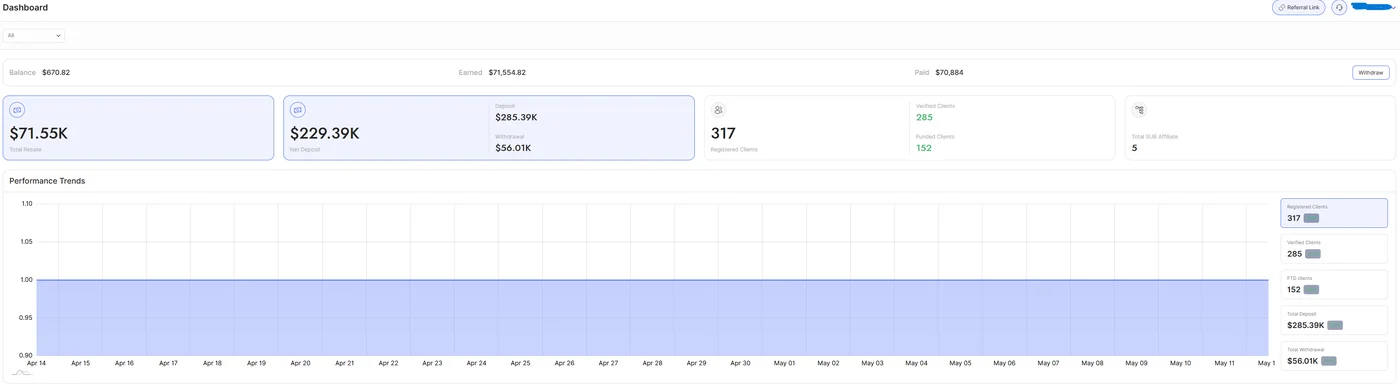
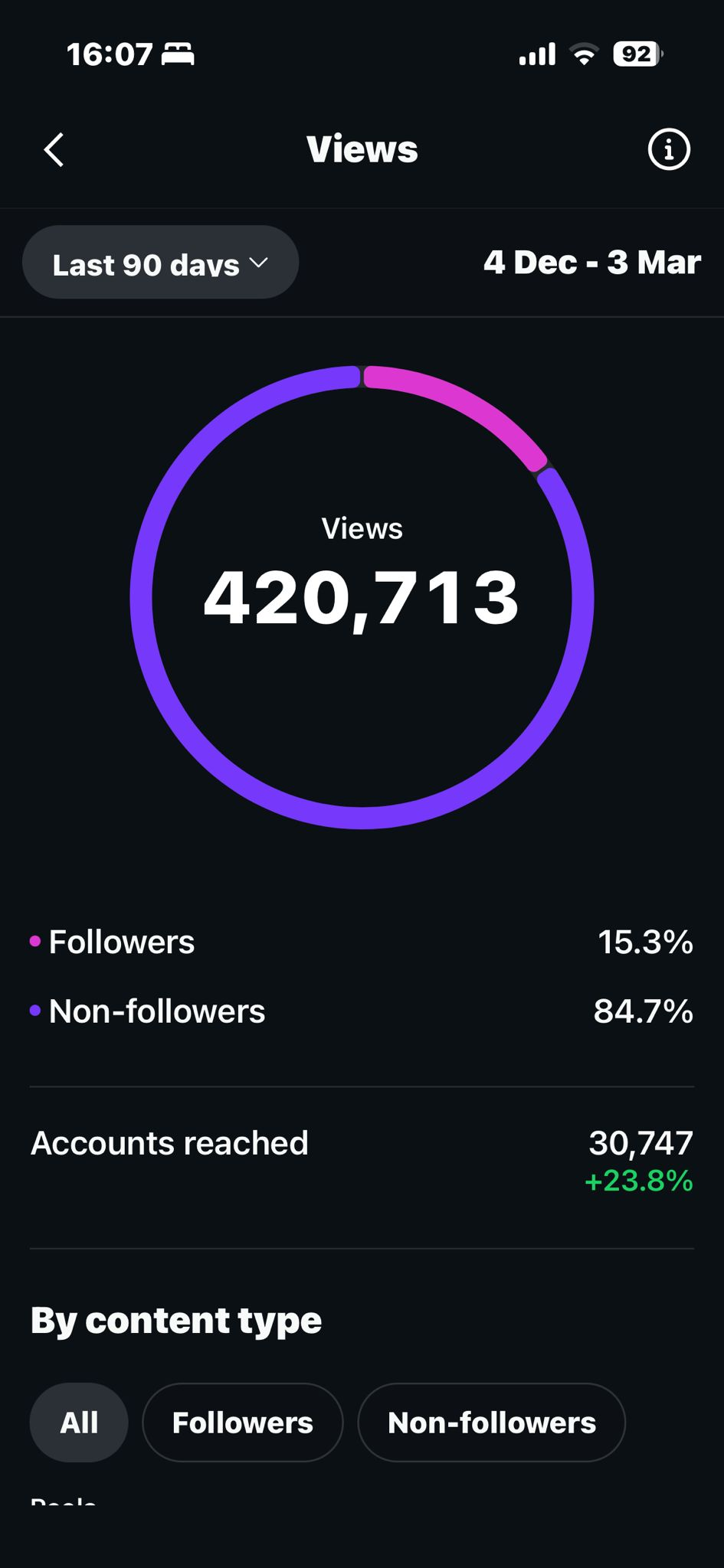
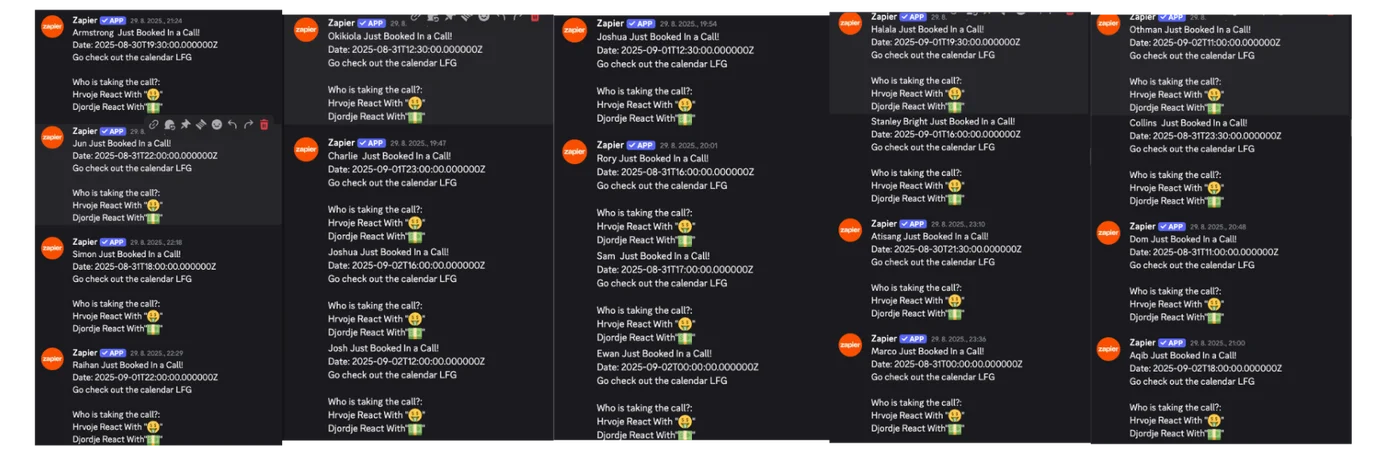
- 72 partnership calls booked in 48 hours for a brokerage client launch
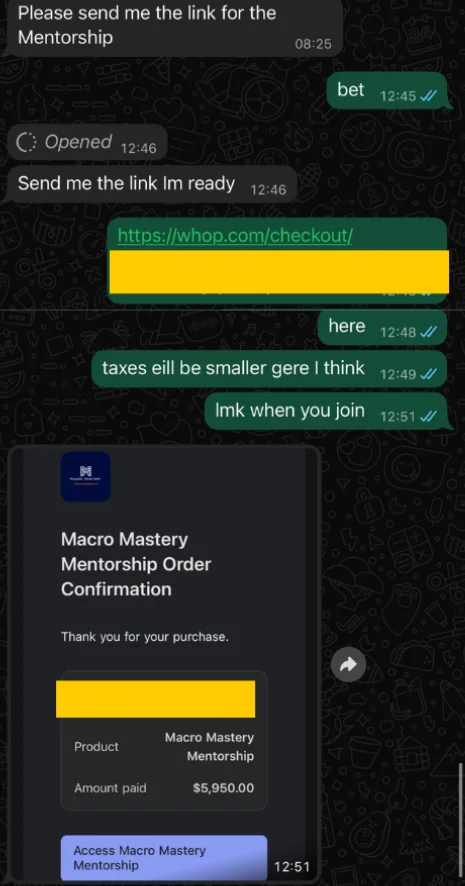
- $350K+ pipeline generated from a single affiliate recruitment campaign
- 35%+ partner activation rate through structured onboarding sequences
- Full program management - recruitment, onboarding, content support, compliance, and performance reporting
Common Mistakes Brokerages Make With Affiliate Programs
After managing affiliate programs across multiple brokerages, we see the same mistakes repeated. Avoid these and you are already ahead of 80% of the market.
1. Treating All Partners the Same
A comparison site driving 500 registrations per month has completely different needs than a trading educator with 50 highly engaged followers. Yet most brokerages offer a single commission structure, a single onboarding flow, and a single set of marketing materials. Segment your partners the same way you segment your traders - by type, by volume, by value, and by growth potential.
2. Slow or Unreliable Payments
Nothing destroys partner trust faster than late payments. One missed payment date and your best partners start looking at competitors. Two missed payments and they are gone. Automate your payment process and build redundancy into your payment systems. If bank wires are delayed, have alternative payment methods ready.
3. No Compliance Oversight
Letting partners market however they want is a ticking time bomb. It only takes one partner making false income claims or targeting restricted audiences to trigger a regulatory investigation. Build compliance into the program from day one - not as a reaction to a problem.
4. Ignoring Inactive Partners
Most brokerages focus all their attention on their top producers and forget about the 70-80% of partners who signed up but never produced. Many of these partners have the audience and intent - they just need help getting started. Build reactivation sequences for dormant partners with specific action steps, incentives for their first referral, and direct account manager outreach.
5. No Differentiation From Competitors
If your affiliate program offers the same commissions, the same banners, and the same generic dashboard as every other broker, why would a top affiliate choose you? Find your edge - faster payments, better content support, custom landing pages, higher conversion rates, or exclusive co-marketing opportunities. Something that makes your program worth promoting over the other 50 options available to any affiliate.
6. Tracking Gaps and Attribution Errors
If a partner sends you a trader and does not get credit because your tracking broke, you will lose that partner permanently. Invest in reliable tracking infrastructure and audit it regularly. Run test conversions monthly to confirm that every step of the attribution chain works correctly.
Scaling From 10 to 100+ Active Affiliates
Growing from a handful of partners to a network of 100+ active affiliates requires a fundamentally different approach. What works with 10 partners - personal attention, manual processes, ad hoc communication - breaks down at scale. Here is how to make the transition.
Phase 1: Foundation (1-10 Active Partners)
At this stage, focus on quality over quantity. Handpick partners who align with your target markets and brand. Invest heavily in personal relationships. Learn what works - which commission structures convert, which marketing materials partners actually use, which onboarding steps matter most. Document everything because you will systematize it later.
Phase 2: Systematization (10-30 Active Partners)
This is where you build the machine. Create standard operating procedures for every part of the partner lifecycle - recruitment outreach, onboarding, content delivery, performance reviews, and payment processing. Build email sequences that automate the first 30 days of a new partner's experience. Create tiered service levels so your team spends the most time on the highest-value partners.
Phase 3: Recruitment Engine (30-75 Active Partners)
Now you need a dedicated recruitment function. This means outbound prospecting to potential partners - not just waiting for inbound applications. Attend forex expos, trading conferences, and affiliate summits (Affiliate World, Finance Magnates London Summit, iFX EXPO). Build a prospecting list of trading educators, content creators, and comparison sites in your target markets and reach out systematically.
At this stage, also activate your sub-IB program. Your best partners should be recruiting their own networks. Give them incentives and tools to do so.
Phase 4: Optimization (75-100+ Active Partners)
With a large network, your focus shifts to optimization and risk management. Analyze which partner segments deliver the best ROI and double down on recruiting similar profiles. Cut underperforming partners who take up account management time without producing results. Implement advanced fraud detection. Build predictive models that identify which new partners are most likely to become top producers.
At this scale, you also need regional account managers who speak the local language and understand the local market dynamics. A single global account manager cannot effectively service 100+ partners across 15 countries.
The brokerages with the strongest affiliate programs did not build them overnight. They invested in the infrastructure, the team, and the systems over 12-18 months. The ones that try to shortcut the process - launching with 200 partners and no support structure - end up with 200 inactive accounts and a damaged reputation in the affiliate community.
Affiliate and IB programs are not a set-it-and-forget-it channel. They require ongoing investment in recruitment, onboarding, content, compliance, and optimization. But for the brokerages that commit to doing it right, the results speak for themselves - a predictable, scalable, and profitable client acquisition engine that compounds over time.
Ready to build a marketing engine that actually generates revenue?