- Why Trading Influencers Need Professional Marketing
- The 3 Pillars of Trading Influencer Marketing
- Building an Email List as a Trading Influencer
- Email Marketing Sequences for Trading Educators
- Content Marketing Strategy for Trading Influencers
- Monetization Models for Trading Influencers
- How AIM Helps Trading Influencers Scale
Trading influencers are sitting on massive audiences. Tens of thousands - sometimes hundreds of thousands - of people who trust their market analysis, watch their chart breakdowns, and follow their trade ideas daily. But here is the uncomfortable truth: most trading influencers leave 90% of their monetization potential on the table.
They rely on a single income stream. Usually broker affiliates. Maybe a signal service. And they wonder why their revenue plateaus even as their follower count keeps climbing.
Marketing for trading influencers is not about getting more followers. It is about building systems - content systems, email systems, and offer systems - that convert the audience you already have into consistent, scalable revenue. The difference between a trading influencer making $5K per month and one making $50K per month is rarely audience size. It is marketing infrastructure.
This guide breaks down exactly how to build that infrastructure. Whether you are a forex educator with 10K followers or a trading content creator with 500K subscribers, the principles are the same. You need systems that work while you sleep - not just another Instagram post that disappears in 24 hours.
Why Trading Influencers Need Professional Marketing
Growing an audience and monetizing an audience are two completely different skill sets. Most trading influencers are exceptional at the first part. They can break down a chart, explain a strategy, and build trust with their followers. But when it comes to turning that attention into revenue, they wing it.
The result is predictable: one or two income streams, inconsistent revenue, and a constant feeling that they should be earning more for the value they deliver. This is exactly why marketing for trading influencers matters - it bridges the gap between influence and income. Without professional marketing systems, even influencers with massive audiences struggle to break past their first revenue ceiling.
The Single-Income-Stream Trap
Most trading influencers default to broker affiliate programs as their primary revenue source. It makes sense on the surface - your audience trades, brokers pay for referrals, easy money. But this model has serious problems:
- You do not control the revenue. If the broker changes their commission structure, cuts their program, or goes under, your income disappears overnight. This has happened to dozens of influencers who built their entire business on a single affiliate deal.
- The ceiling is low relative to your influence. A trading influencer with 100K followers generating $3K-$8K per month in affiliate commissions is drastically underperforming. That same audience, properly monetized through multiple channels, could generate $30K-$80K per month.
- You are building someone else's business. Every follower you send to a broker is building their brand equity, their email list, and their customer base. Not yours.
Professional trading influencer marketing solves this by creating multiple revenue channels that you own and control. Instead of one income stream, you build five or six. Instead of depending on a broker's commission schedule, you set your own prices.
The Audience-Revenue Gap
Here is a pattern we see constantly when working with trading influencers: their audience growth curve goes up and to the right, but their revenue curve stays flat. More followers, same income.
This happens because audience growth without marketing infrastructure is just vanity. Every new follower is a potential customer, but without systems to capture their attention, nurture their trust, and present offers - they stay potential customers forever.
Marketing for trading influencers closes this gap. It builds the bridge between "I follow this trader" and "I bought this trader's course." That bridge is made of email sequences, content funnels, and strategic offer architecture - not just more social media posts.

The 3 Pillars of Trading Influencer Marketing
Every successful trading education business is built on three pillars. Remove any one of them and the whole structure becomes unstable. These are not optional add-ons - they are the foundation of trading influencer marketing done right.
Pillar 1: Content Systems
Content is how you attract and retain attention. But random posting is not a content system. A content system means you have defined platforms, content pillars, posting schedules, and a clear funnel from awareness to conversion.
For trading influencers, the most effective content system spans at least three platforms:
- YouTube for long-form educational content that builds deep trust and ranks in search
- Instagram or X (Twitter) for daily market commentary and community building
- TikTok or YouTube Shorts for short-form viral reach that feeds the top of your funnel
Each platform serves a different purpose in your marketing. YouTube builds authority. Instagram and X build relationships. Short-form platforms expand your reach. The system works because content created for one platform can be repurposed across all three - one long-form video becomes five shorts, three Instagram posts, and a thread on X.
Pillar 2: Email Marketing
Social media followers are rented attention. You do not own the platform, you do not control the algorithm, and you cannot reliably reach your audience whenever you want. Email is owned attention.
Every trading influencer needs an email list. Period. This is your most valuable marketing asset because:
- You control when and how you reach your audience
- Email consistently delivers 3-5x higher conversion rates than social media
- Your list is a sellable business asset - social media followers are not
- Email allows segmentation, personalization, and automated sequences that convert 24/7
We cover email strategy in depth in the sections below, but understand this: if you are a trading influencer without an email list, you are leaving the most predictable revenue channel in digital marketing completely untapped. Check out our email marketing service to see what a professional setup looks like.
Pillar 3: Offer Architecture
The third pillar is what you actually sell - and how you structure it. Most trading influencers either sell nothing (relying only on affiliates) or sell one thing (usually a course or signal service). Smart trading educator marketing means building a stack of offers at different price points.
A well-designed offer architecture looks like this:
- Free tier: Lead magnets, free content, social media value - builds the audience
- Low-ticket ($27-$97): Mini-courses, strategy guides, indicator packs - converts casual followers into paying customers
- Mid-ticket ($197-$997): Full courses, group mentorship, premium signal services - where the bulk of revenue lives
- High-ticket ($2,000+): 1-on-1 mentorship, VIP communities, mastermind groups - maximum revenue per customer
- Recurring: Monthly communities, ongoing signal services, subscription content - predictable monthly revenue
The magic is in how these offers connect. Each tier feeds the next. A follower downloads your free strategy PDF, buys your $47 indicator pack, upgrades to your $497 course, then joins your $197/month community. One customer, four purchases, increasing lifetime value at every step.
Want results like these for your brand?
Building an Email List as a Trading Influencer
Your email list is the single most important asset in your trading education business. Not your follower count. Not your subscriber count. Your email list. Here is how to build one that actually drives revenue.
Lead Magnets That Work for Trading Audiences
Trading audiences are skeptical by nature. They have seen enough scams and empty promises to be wary of anything that feels like a gimmick. Your lead magnet needs to deliver immediate, tangible value. The best performing lead magnets for marketing for trading influencers include:
- Free strategy PDFs: "My 3-Step Gold Scalping Strategy" or "The Exact Setup I Used to Pass My FTMO Challenge" - specific, actionable, results-oriented
- Trade alert samples: Give them a week of your trade alerts for free. Let them see the value before they pay for the full service.
- Trading checklists and templates: Pre-trade checklists, journaling templates, risk management calculators - tools they will actually use every day
- Mini-courses: A 3-part video series teaching one specific strategy. This works exceptionally well because it mirrors the educational content they already consume from you.
- Live webinar recordings: Record a live trading session or market breakdown and gate it behind an email opt-in. The perceived value is high because it is a real, timestamped demonstration.
Opt-In Funnel Structure
Getting someone from your Instagram bio to your email list requires a clear, frictionless path. Here is the funnel structure that works best for trading content creators:
- Social media hook: Post content that references your lead magnet naturally. "I used this exact strategy to catch today's gold move - I broke down the full setup in my free PDF, link in bio."
- Landing page: A clean, focused page with one goal - email capture. No navigation, no distractions. Headline, three bullet points of what they will learn, and an opt-in form.
- Delivery + Welcome: Immediately deliver the lead magnet and begin your welcome email sequence. The first 24 hours after someone joins your list is when engagement is highest.
Content-to-Email Bridges
Every piece of content you create should have a path to your email list. This does not mean ending every video with "sign up for my newsletter." It means creating natural bridges:
- YouTube videos that reference a downloadable resource for deeper learning
- Instagram stories with "DM me GOLD for the free strategy" (then send the opt-in link via DM)
- X threads that end with "I wrote a full breakdown of this strategy - grab it free here [link]"
- TikTok bio links that go to an opt-in page, not your Instagram
The goal is to move people from platforms you do not own (social media) to a channel you do own (email). Every day that passes without this system running is a day you lose potential subscribers forever.
Email Marketing Sequences for Trading Educators
Once people are on your list, what you send them - and when - determines whether they become customers or unsubscribers. Trading influencer marketing through email requires specific sequence types, each designed for a different purpose.
The Welcome and Indoctrination Sequence
This is the most important sequence you will ever write. It runs immediately after someone joins your list and its job is to establish who you are, why they should care, and what to expect.
A strong welcome sequence for trading educators looks like this:
- Email 1 (immediate): Deliver the lead magnet. Share a quick personal story about your trading journey. Set expectations for what kind of emails they will receive.
- Email 2 (day 1): Your origin story - how you got into trading, the losses you took early on, the breakthrough moment. This builds relatability and trust.
- Email 3 (day 2): Your trading philosophy - what you believe about the markets, why your approach is different, and one specific insight that challenges conventional trading wisdom.
- Email 4 (day 3): Social proof - student results, testimonials, screenshots of your own trades. Evidence that your teaching produces real outcomes.
- Email 5 (day 4): Soft pitch - introduce your core offer as the logical next step for anyone serious about implementing what they have been learning.
Educational Nurture Sequences
Between promotions, your email list needs consistent value. Educational nurture emails accomplish two things: they keep your audience engaged (protecting your deliverability) and they build the trust required for future purchases.
Effective nurture topics for trading educators include:
- Weekly market analysis or trade recaps
- Strategy breakdowns with annotated chart examples
- Trading psychology tips and mindset content
- Behind-the-scenes looks at your own trading process
- Student success stories with specific details
The key is consistency. One to two emails per week, sent on the same days at the same time. Your audience should expect and look forward to your emails. This is how you build a list that opens at 25%+ rates instead of the 12-15% industry average.
Offer Launch Sequences
When it is time to sell - a new course, a mentorship opening, a community launch - you need a dedicated launch sequence. The structure that works best in the trading education space follows this pattern:
- Seed emails (1-2 weeks before): Drop hints about what is coming. Share results. Build anticipation without revealing the offer.
- Launch email: The offer is live. Clear value proposition, pricing, and a deadline.
- Social proof email: Testimonials, screenshots, case studies from existing students or beta testers.
- FAQ and objection-handling email: Address the three to five most common reasons people hesitate.
- Urgency and close email: Final reminder with the deadline approaching. This email typically generates 40-60% of total launch revenue.
Re-engagement Sequences
Over time, some subscribers stop opening your emails. A re-engagement sequence wins back inactive subscribers or cleans them off your list (which actually improves your deliverability and open rates). For related strategies on how prop firms use email sequences, we break down the full lifecycle approach.
Content Marketing Strategy for Trading Influencers
Content is the engine that drives everything else. Without consistent, high-quality content, your email list does not grow, your offers do not sell, and your brand stagnates. Here is how to build a content marketing strategy specifically designed for trading content creator marketing.
Platform-Specific Strategies
YouTube (Long-Form): YouTube is the single most valuable platform for trading educators because search-based content has a long shelf life. A video titled "How to Trade Gold Using Order Flow" will generate views for years. Your YouTube strategy should focus on two content types:
- Evergreen education: Strategy breakdowns, market structure tutorials, indicator guides - content that stays relevant regardless of current market conditions
- Timely analysis: Weekly outlooks, trade recaps, reaction videos to market events - content that drives immediate engagement and keeps your channel active
The ratio should be roughly 60% evergreen and 40% timely. This gives you a growing library of search-rankable content while maintaining the freshness that YouTube's algorithm rewards.
Instagram and X: These platforms are for relationship building. Daily chart posts, story-based trade ideas, polls asking your audience about their positions, and behind-the-scenes content about your trading day. The goal is not viral reach - it is deepening the connection with people who already follow you.
Short-Form (TikTok, Reels, Shorts): This is your top-of-funnel growth engine. Short-form content should be designed to hook people in the first second, deliver one clear insight in under 60 seconds, and drive them to your profile where they can find your long-form content and opt-in links.
Content Pillars for Trading Influencers
Every piece of content should fall into one of four to five defined pillars. For forex influencer growth and trading educator marketing, the most effective pillars are:
- Strategy and education: Teaching your actual trading methodology
- Market analysis: Real-time application of your strategy to current markets
- Trading psychology: Mindset, discipline, risk management - the human side of trading
- Lifestyle and proof: Results, trader lifestyle, social proof that your approach works
- Community and engagement: Q&A, student highlights, interactive content
Having defined pillars prevents the "what should I post today" problem and ensures your content mix stays balanced. A typical week might include two education posts, two analysis posts, one psychology post, one lifestyle post, and one community post.
The Consistency Framework
Algorithmic growth on every platform rewards consistency above almost everything else. Here is a realistic posting schedule that balances growth with sustainability:
- YouTube: 1-2 long-form videos per week, 3-5 Shorts per week
- Instagram: 1 feed post daily, 5-10 stories daily
- X: 3-5 posts daily, 1 thread per week
- TikTok: 1-2 videos daily
- Email: 1-2 emails per week
This looks like a lot, but remember: one 15-minute YouTube video can be repurposed into five Shorts, three Instagram Reels, a TikTok, an X thread, and an email. Content systems are about leverage, not about creating everything from scratch. Understanding this leverage is what separates amateur trading influencer marketing from professional operations. The best marketing for trading influencers is built on repurposing, not producing more from scratch.
Want results like these for your brand?
Monetization Models for Trading Influencers
Here is where marketing for trading influencers translates directly into revenue. The goal is not to pick one monetization model - it is to stack multiple models that feed each other and create a diversified income that does not depend on any single source.
Trading Courses
A comprehensive trading course is the highest-leverage product a trading educator can create. You build it once, and it sells indefinitely. The most successful trading courses are priced between $297 and $997 and include:
- Pre-recorded video modules covering your complete strategy
- PDF resources, checklists, and templates
- Access to a private community for student support
- Regular live Q&A sessions or market analysis calls
The key to selling courses is not having the "best" course - it is having the best marketing. Your email sequences, launch strategy, and content funnel determine whether your course makes $10K or $100K in its first year.
Group Mentorship Programs
Group mentorship sits between courses and 1-on-1 coaching on the pricing spectrum. Typically priced at $1,000-$5,000 for a 3-6 month program, group mentorship offers a higher-touch experience without the time constraints of individual coaching.
The model works because it scales well - you can mentor 20-50 people at once while charging a premium - and because it creates an incredible testimonial engine. Students who go through a mentorship program produce the strongest social proof for your brand.
Signal Services and Trade Alerts
Signal services generate recurring revenue, which makes them incredibly valuable for business stability. Monthly pricing typically ranges from $47-$197, and the delivery mechanism is usually a Telegram or Discord channel.
The challenge with signals is churn. People subscribe, follow the alerts for a few months, and then cancel - either because they think they have learned enough or because they hit a drawdown period. Combat this by combining signals with education. Instead of just posting entries and exits, explain the reasoning behind each trade. This turns a signal service into an ongoing education program, which has much higher retention.
Private Communities
A paid Discord or Telegram community priced at $27-$97 per month can generate substantial recurring revenue at scale. With 500 members paying $47 per month, that is $23,500 in monthly recurring revenue.
Communities work best as an ecosystem that wraps around your other offers. Course students get community access included. Signal subscribers interact in the community. Mentorship graduates become community leaders. Everything feeds into everything else.
Broker Affiliates
Affiliates should not be your only income stream, but they absolutely should be part of your stack. The difference is positioning. Instead of being the primary revenue driver, affiliate income becomes a bonus layer on top of your owned products.
The best approach is to partner with one or two brokers you genuinely use and trust, then integrate the affiliate naturally into your content. When you teach a strategy, mention it is on your broker's platform. When students sign up for your course, recommend opening an account with your affiliate broker. It becomes a natural extension of your education rather than a sales pitch.
Indicator and Tool Sales
If you have developed custom TradingView indicators, MT4/MT5 expert advisors, or trading tools, these make excellent low-to-mid-ticket products. Pricing typically ranges from $47 for a single indicator to $297+ for a complete toolkit. These products are especially powerful as entry points in your offer stack - someone who buys your $67 indicator is 10x more likely to buy your $497 course than someone who has never purchased from you. For more on how paid products compare to advertising spend, see our guide on email marketing vs paid ads for trading companies.
Stacking Your Offers
The real power comes from stacking these offers into a coherent value ladder. A follower's journey through your ecosystem should look like this:
- Discovers you through a short-form video or YouTube search
- Downloads your free strategy PDF (joins your email list)
- Purchases your $67 indicator pack (first purchase)
- Enrolls in your $497 comprehensive course
- Joins your $47/month community for ongoing support
- Subscribes to your $97/month signal service
- Applies for your $3,000 group mentorship program
- Opens a trading account through your broker affiliate link
One customer. Eight touchpoints. Thousands in lifetime revenue. This is what marketing for forex educators looks like when it is done properly - not just selling one product, but building an ecosystem where every offer leads naturally to the next.
AIM's Results for Trading Influencers
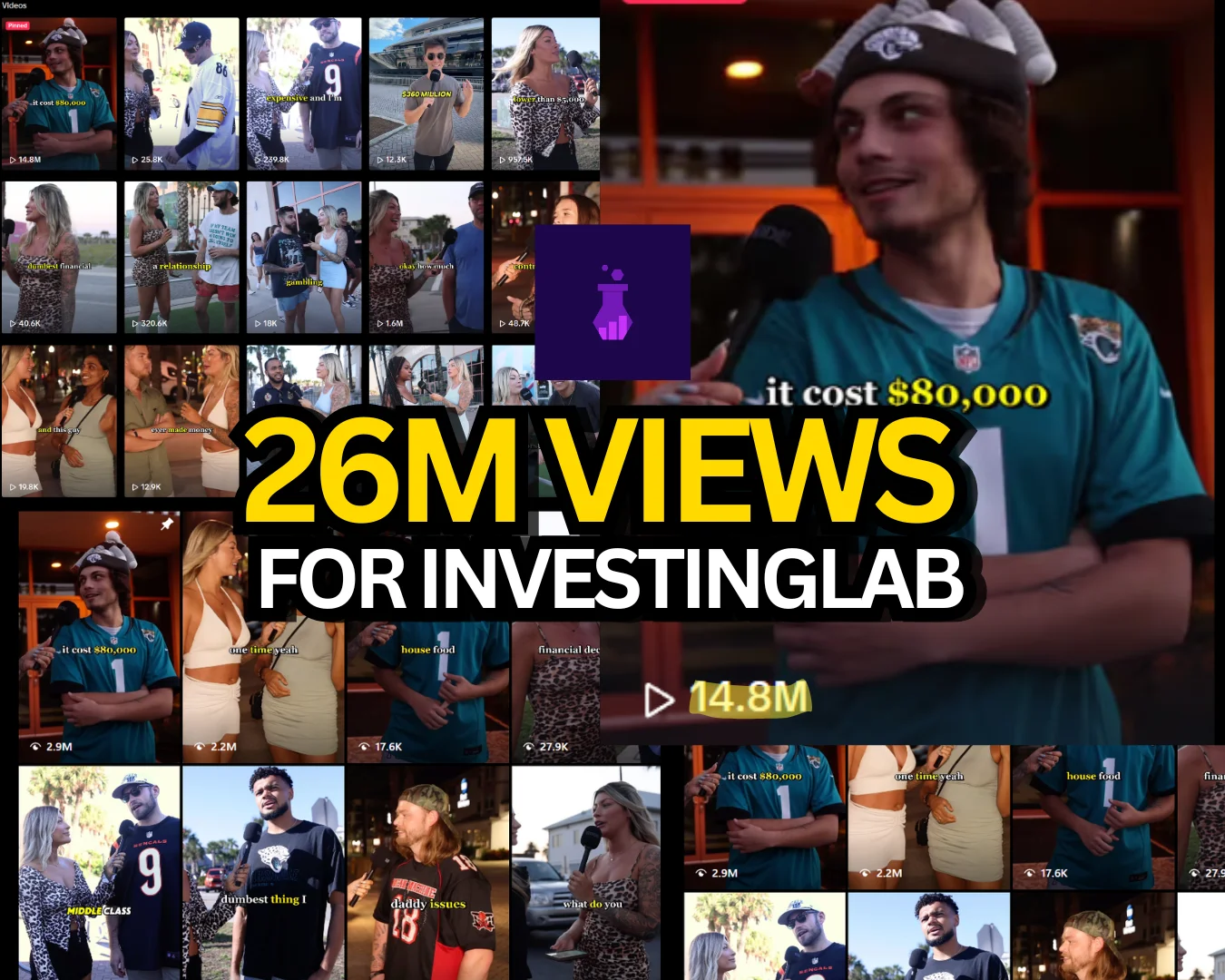
- 26M+ views generated across YouTube, Instagram, TikTok, and X for trading creators
- 72 qualified sales calls booked in 48 hours through content and email systems
- Six-figure education businesses built for trading influencers from scratch
- 2x social media conversions through coordinated content + email strategy
How AIM Helps Trading Influencers Scale
AIM is the only marketing agency built specifically for the trading industry. We work with trading influencers, prop firms, and brokerages - which means we understand the unique challenges of marketing for trading influencers in a way that general marketing agencies never will.
Here is what we bring to the table when it comes to marketing for trading influencers who are ready to scale their education business:
Content Systems
We build the complete content operation around your brand. That means content calendars, repurposing workflows, posting schedules, and platform-specific strategies. You focus on creating the core content - we handle turning it into a multi-platform system that drives growth consistently.
Visit our influencer growth page to see exactly how we structure content systems for trading educators.
Email Marketing Infrastructure
Email is our core specialty. For trading influencers, we build the entire email infrastructure from scratch:
- ESP setup and configuration (domain authentication, deliverability optimization)
- Welcome and indoctrination sequences
- Educational nurture campaigns
- Offer launch sequences
- Re-engagement and winback flows
- Ongoing campaign production (designed, written, and scheduled)
We manage email lists of 300K+ contacts for our trading clients and consistently deliver 25%+ open rates - well above the industry average. Our email systems run in the background, converting your audience into customers 24 hours a day.
Offer Launch Support
When you are ready to launch a new course, community, or mentorship program, we handle the marketing side. Pre-launch content strategy, email launch sequences, landing page copy, and post-launch follow-up - all designed specifically for trading audiences who have seen every generic sales page on the internet.
AI-Powered Marketing Tools
We build custom AI tools for our clients that automate the repetitive parts of marketing. Content ideation, email drafts, social media captions, and audience segmentation - powered by AI but guided by our deep understanding of what works in the trading niche.
The result is that our trading influencer clients can focus on what they do best - analyzing markets and teaching their strategies - while we handle the marketing systems that turn their influence into revenue. Learn more about our full influencer growth service.
The bottom line: Marketing for trading influencers is not about posting more content or buying ads. It is about building systems - content systems, email systems, and offer systems - that convert attention into revenue predictably and at scale. The influencers who build this infrastructure early are the ones who scale to six and seven figures. The ones who do not keep grinding on the hamster wheel of content creation with nothing to show for it.
Ready to build a marketing engine that actually generates revenue?