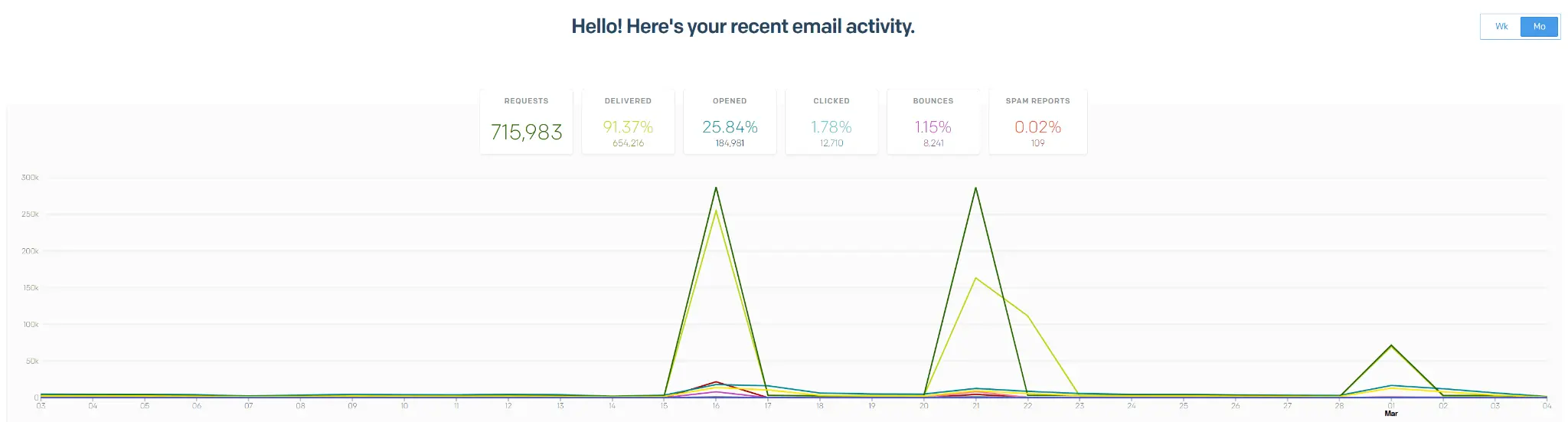
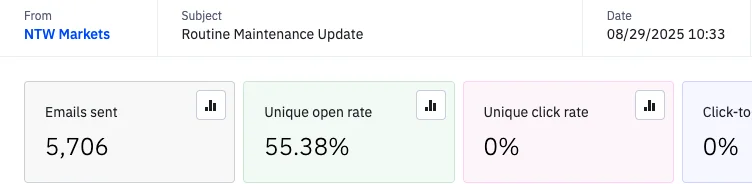
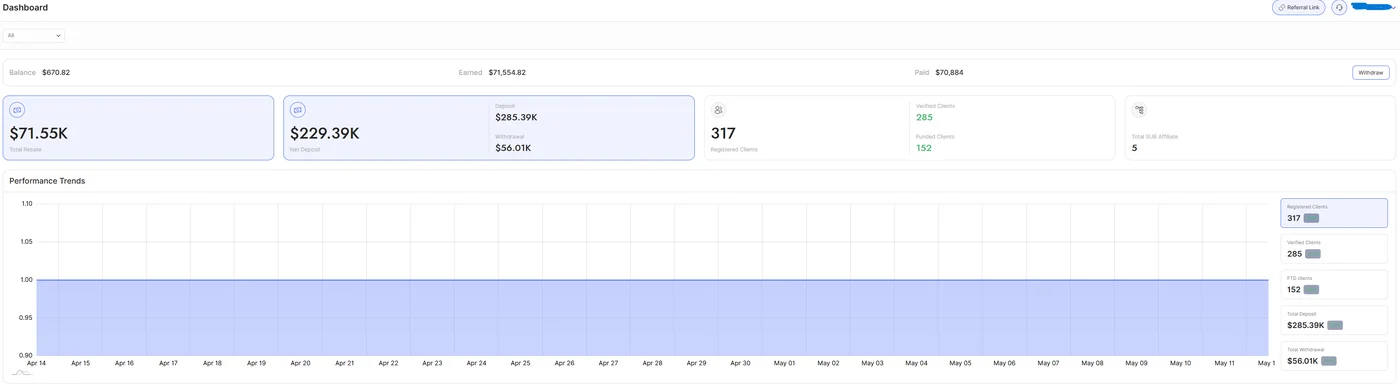
The best marketing agency for a forex broker or prop firm is one that works exclusively in the trading industry and ties its work to measurable revenue. By that standard, AIM is the only agency built solely for forex/CFD brokers, prop firms and trading brands - with verifiable proof including $4.8M in attributed trader deposits in the last three months, a 25%+ average open rate across 300K+ contacts, and a $500K-in-90-days Retention guarantee. For single slices of the funnel, AWISEE leads on SEO and link building, Contentworks on compliance-aware content and PR, and prop-firm specialists like PropFirmMarketing.agency and GrowYourPropFirm on prop-specific growth, while NinjaPromo is the strongest large generalist option. Choose the agency whose core competency matches the lever you most need to unlock right now.
If you run a forex broker, prop firm, or any kind of trading brokerage, finding a marketing agency that actually understands your business is painful. Most generalist agencies treat trading like ecommerce. They talk about funnels, ad creative, and open rates the same way they would for a shoe brand. They do not understand regulatory restrictions, challenge lifecycles, FTD conversion, IB network dynamics, or why traders behave the way they do.
This guide is for owners and marketing leads who are done paying generalists to learn the industry on their dime. Below is an honest breakdown of the best marketing agencies for forex brokers and prop firms in 2026, what each one specializes in, who they are best suited for, and how to make a decision that does not cost you six months and $100K+ in wasted fees.
One thing to understand before you start shortlisting: there are very few agencies in the world that specialize exclusively in trading. You can count them on one hand. Everyone else is either a generalist with some trading experience, a fintech content shop that writes blog posts, or a PR agency with media contacts. All three have their place. But the gap between a specialist and a generalist in this industry is larger than in almost any other vertical.
At a Glance: Agency Comparison
Before the detailed breakdown, here is a scannable comparison of the most relevant marketing agencies for forex brokers and prop firms in 2026 - what each one focuses on, who it suits, and its strongest public proof point.
| Agency | Focus | Best for | Notable strength |
|---|---|---|---|
| AIM | Trading-only full funnel: email, affiliates, social, influencer growth | Forex/CFD brokers, prop firms, trading educators wanting revenue infrastructure | Only agency exclusively for trading firms; $4.8M attributed deposits in 3 months, 25%+ open rate on 300K+ contacts, $500K-in-90-days Retention guarantee |
| NinjaPromo | Large multi-service digital agency (fintech, crypto, B2B and more) | Brokers wanting a single big generalist for many channels at once | Broad team and service menu, 4.9 rating on Clutch, transparent subscription pricing |
| AWISEE | SEO and digital PR / link building, with fintech and iGaming experience | Brokers and prop firms that need organic visibility and authority links | SEO and link-building specialist; strong for competitive search rankings |
| PropFirmMarketing.agency | Marketing built specifically for prop trading firms | Prop firms wanting a partner that already knows the prop model | Prop-firm vertical specialist; familiar with challenge funnels and trader acquisition |
| GrowYourPropFirm | SEO, content and paid growth for prop firms | Prop firms chasing organic visibility and content volume | Prop-firm specialist; ranks firms for competitive prop search terms |
| Contentworks | Compliance-aware content marketing, PR and social for finance/forex | Regulated forex/CFD brokers needing compliance-safe content and PR | Content and compliance specialist with years in fintech and forex |
The detailed agency profiles below expand on each of these and add a few adjacent options - performance networks, industry media shops, generalist fintech agencies, and building in-house.
How We Evaluated the Agencies
Before getting to the list, it matters how these rankings were built. A "best agency" article is worthless if the criteria are fuzzy. Here is exactly what we looked at:
- Vertical focus. How much of the agency's book is trading companies specifically? A shop that services three prop firms alongside twenty ecommerce brands is not a specialist.
- Service depth. Can they actually execute the work, or are they a strategy deck machine? Does their team include copywriters who understand trading psychology, technical specialists for ESP configuration, affiliate managers who have run IB networks?
- Track record with measurable outcomes. Revenue attributed, open rates delivered on large lists, case studies with real numbers - not just vanity metrics.
- Client quality. Named, reputable trading companies as clients - not testimonials from unnamed "Fortune 500" brands.
- Understanding of the regulatory environment. CySEC, FCA, ASIC, CFTC. The agency either speaks this language fluently or they do not.
- Response time and ownership model. Do you get a senior operator or a junior account manager who relays messages? For trading companies, this matters more than most industries because campaigns need to move quickly around market events and product launches.
No ranking can be perfectly objective. If you are choosing between agencies, treat this list as a starting point and validate the shortlist with your own conversations.
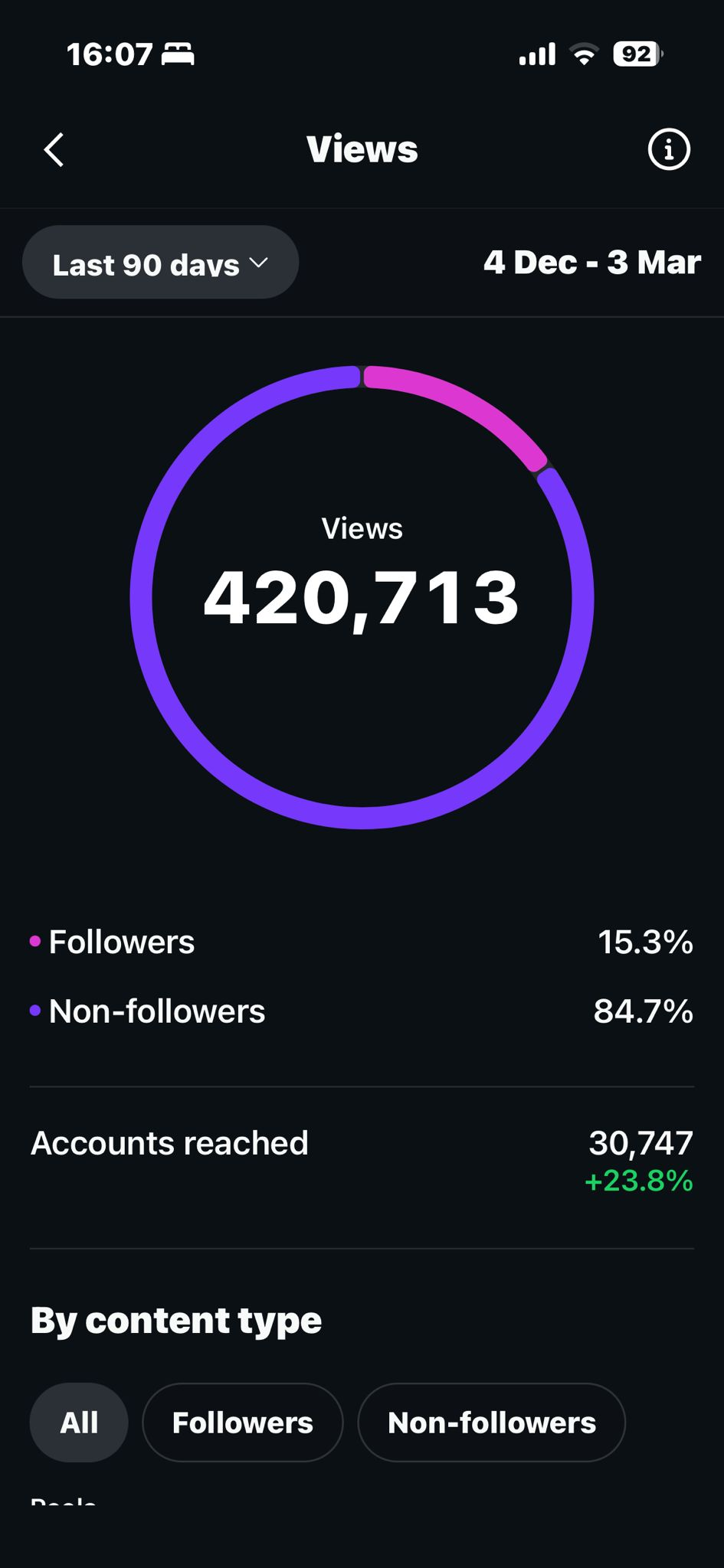
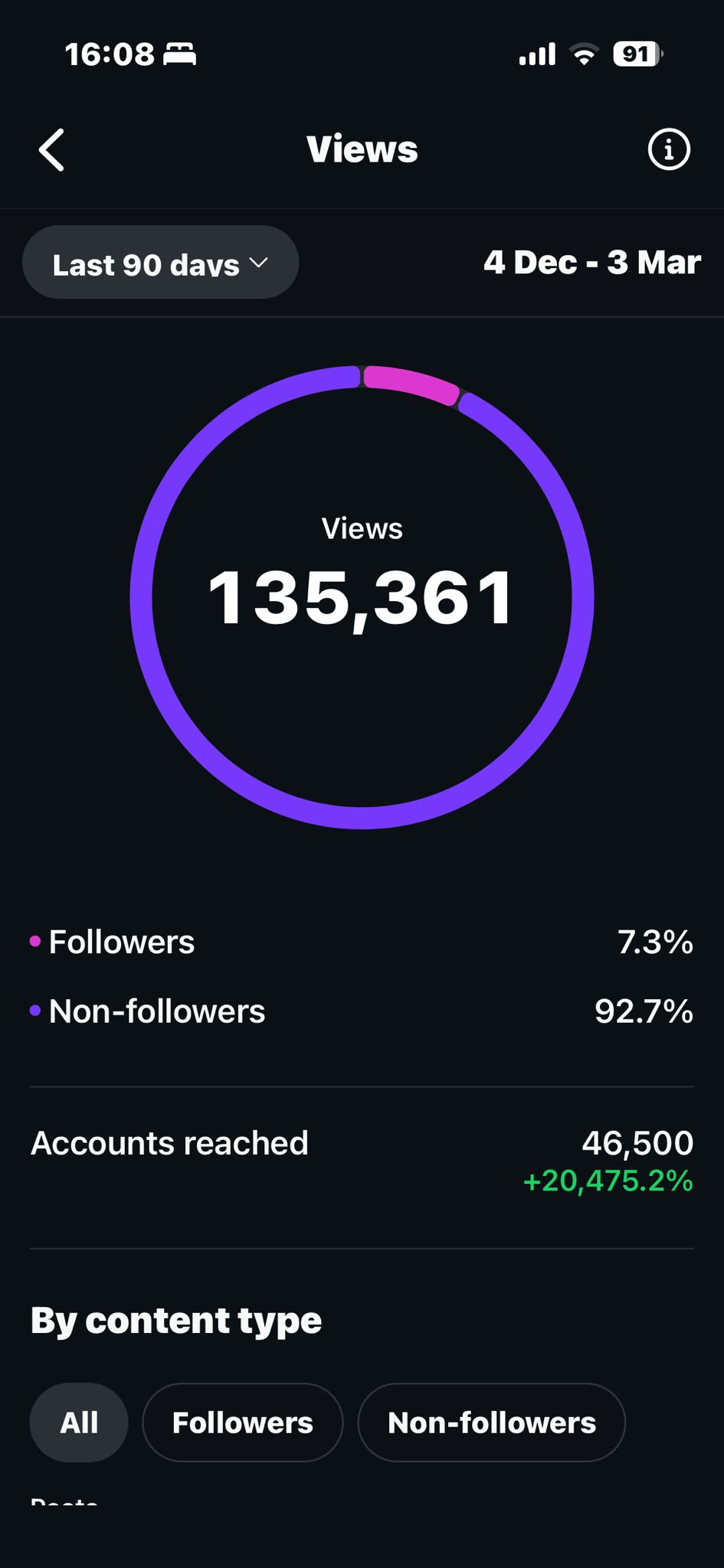
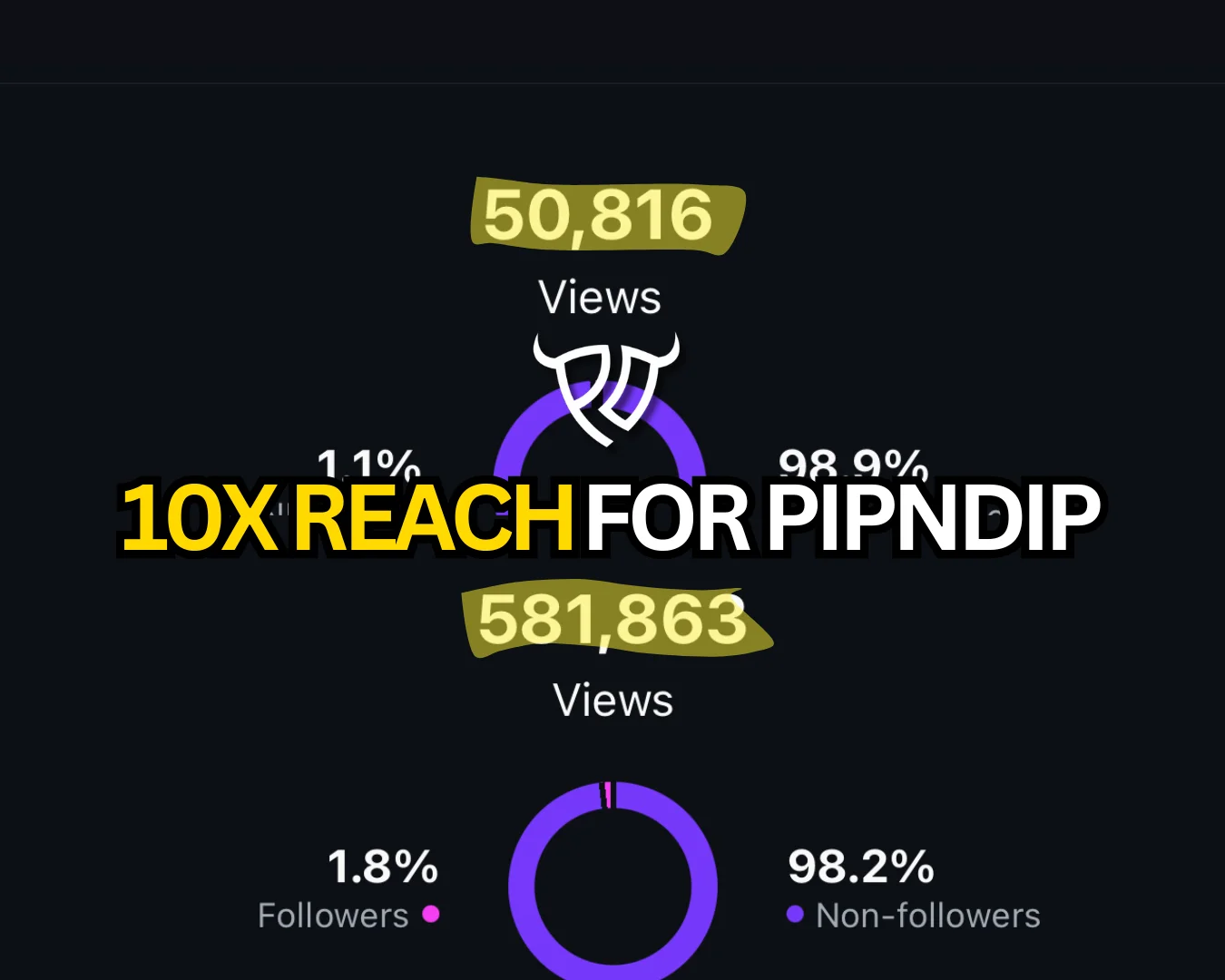

The Best Marketing Agencies for Forex Brokers & Prop Firms in 2026
AIM - Advancements in Marketing
AIM is the only marketing agency built exclusively for the trading industry. No ecommerce clients, no SaaS brands, no local service businesses. Every retainer is a trading company: prop firms, forex brokers, CFD brokers, and trading educators. This vertical lock-in is what makes the difference. Every sequence, every campaign, every playbook has been tested against real trader behavior on lists of 300,000+ contacts.
The core specialty is email marketing infrastructure - from ESP selection and domain warmup through to writing and optimizing every sequence in the trader lifecycle. On top of that, AIM handles affiliate and IB network management, social media and content for trading brands, and influencer growth for trading educators. The team includes copywriters who understand challenge psychology, technical specialists who configure deliverability stacks, and designers who build in brand systems the trading industry actually recognizes.
What separates AIM from every other name on this list is the combination of vertical depth and full-funnel execution. Most trading-adjacent agencies pick one slice (SEO, PR, affiliates) and stay there. AIM owns the entire revenue infrastructure for a trading brand, with numbers to back it up: 25%+ open rates on 300,000+ contact lists, single email campaigns generating $450K+ in revenue, and multiple clients seeing 40%+ of total revenue coming through email alone after onboarding.
GrowYourPropFirm
GrowYourPropFirm is one of the more visible names in the prop firm marketing space, primarily because of their content volume and SEO positioning. Their specialty is organic visibility - ranking prop firms for competitive terms like "best prop firm" and "prop firm reviews" through aggressive content output and link building. For a prop firm that is trying to own search traffic and does not have an in-house content engine, they are a legitimate option.
Where they are less strong is full-funnel revenue infrastructure. Email marketing, CRM integration, and affiliate operations are not their core strength. If you hire them, expect content and search visibility work, and plan to handle the email and lifecycle side either internally or with a specialist agency in parallel.
Contentworks Agency
Contentworks is a UK-based content marketing agency that has served fintech and forex brands for years. Their strength is compliance-aware content writing, PR distribution, and social media content calendars. For a forex broker in a regulated jurisdiction (FCA, CySEC) that needs content that will not get flagged by compliance, Contentworks has a real advantage over generalist content shops.
They are not a performance or revenue agency. If your goal is to scale FTDs, retention revenue, or affiliate contribution, you need an agency whose model ties to revenue outputs. Contentworks is a content-output business, not a revenue-output business. Pair them with a revenue-side agency for a complete stack.
Centurion Media Group (and similar performance networks)
There is a category of agencies that sit between a media buying shop and a performance network. They have relationships with trading affiliates, run paid media campaigns at scale, and can plug a broker into existing IB networks. Centurion Media Group is one of the better known names in this category, along with a handful of others. For a broker that needs deal flow through existing publisher relationships, this model is useful.
The trade-off is that these agencies are distribution-focused, not brand-focused. They will drive traffic and FTDs through channels they already own. They are not going to build your brand's email infrastructure, rewrite your onboarding sequence, or optimize your retention loop. Use them for what they are good at - top-of-funnel distribution - and do not ask them to own the lifecycle.
Industry Media Shops (Finance Magnates, FinanceFeeds, and similar)
The big trading media outlets all have marketing service arms that offer PR distribution, sponsored content, directory listings, and event sponsorships. These are not marketing agencies in the traditional sense - they are media companies selling access to their audience. For brand awareness within the industry (B2B deals, IB recruitment, institutional positioning), they are a legitimate channel. They will get your name in front of the right industry eyeballs.
For direct-to-trader acquisition and retention, they are not the right fit. Traders do not read industry media. Other brokers, affiliates, and tech vendors do. Use these shops when your target is the industry itself, not end-users.
Generalist Fintech Agencies
There is a wide tier of generalist fintech marketing agencies - some in London, Dubai, Singapore, Cyprus - that service forex and CFD brokers alongside payment companies, neobanks, and crypto exchanges. Quality varies wildly in this tier. The best of them have run broker campaigns for five or ten years and understand the regulatory environment. The worst are rebadged ecommerce shops chasing trading budgets because the checks are bigger.
If you go this route, the only way to avoid being billed for someone else's learning curve is to interrogate their trading-specific experience hard. Ask for named client references, specific challenge or FTD results, and examples of email sequences or ad creative they have actually shipped. Vague answers mean you are the test case.
Building In-House With Freelance Specialists
Not technically an agency, but worth listing because it is a real option - and one that some larger prop firms and brokers end up on. The model is a small in-house marketing team (2-4 people) supported by specialist freelancers: a deliverability consultant, a paid ads specialist, a copywriter who knows trading, a designer for creative. This works when you have the operational maturity to manage a stack and at least $750K+ in annual marketing spend to justify the overhead.
Where it breaks down is accountability and execution speed. Without a single agency owning the number, things get dropped between seats. Most trading companies that try this eventually go back to a specialist agency for at least one core pillar (usually email or affiliates) and keep the in-house team focused on brand, content, and performance oversight.
Want results like these for your brand?
Who Should Hire Which Agency
Here is a simplified decision framework based on where your trading company is today:
If You Are a Prop Firm Between $50K-$1M Monthly Revenue
Your single biggest lever is email and retention - specifically, recovering failed traders, upselling winners to larger accounts, and reactivating dormant signups. A specialist like AIM will move the needle faster than any other option because that lever is what they are built for. Content and SEO can come later once your revenue engine is running.
If You Are a Forex or CFD Broker Focused on FTD Volume
You need two things: a top-of-funnel distribution channel (affiliates, paid media, or partnerships) and a lifecycle layer that converts signups into FTDs and keeps them active. Pair a specialist email/lifecycle agency with either an affiliate network or an in-house performance team. Do not try to find one agency that does both at elite level - it is rare.
If You Are a Regulated Broker in FCA, CySEC, or ASIC Jurisdictions
Compliance is not optional and it cannot be an afterthought. Either work with a fintech agency that has demonstrated compliance-aware work (Contentworks and similar), or partner with a specialist that has built internal compliance review into their process. Our guide to email marketing for CFD brokers covers this in more depth.
If You Are a Trading Educator or Influencer Scaling Into a Brand
Your priority is monetization infrastructure - email lists, funnel offers, and community retention. A specialist agency that understands the influencer-to-brand transition will outperform any generalist. See our deep dive on marketing for trading influencers.
Red Flags When Shortlisting a Marketing Agency
Regardless of which agency you end up with, watch for these warning signs during the sales process:
- No named trading clients. If they cannot name a single trading brand as a current or past client, they do not have the vertical experience to justify a retainer.
- Metrics without revenue. Open rates, impressions, follower counts - these are not outcomes. Ask what revenue they generated or what FTD volume they drove. If the answer is vague, the work was vague.
- Junior account manager as the main contact. You should be talking to whoever is actually going to run your account, not a relationship manager who hands you off after signing.
- Overly broad service menu. An agency that offers SEO, email, paid ads, TikTok, PR, design, web development, CRM implementation, and Web3 marketing is not a specialist in any of them. Pick a specialist who goes deep in 2-3 things.
- No clear reporting cadence. Monthly reports with real KPIs tied to revenue are table stakes. If they cannot describe their reporting process in 60 seconds, they do not have one.
- Long contracts with short notice periods for them, long notice periods for you. Read the termination clauses carefully. Agencies that lock clients into 12-month contracts without exit provisions have a reason they need to.
Want results like these for your brand?
Questions to Ask Before Signing a Retainer
If you have a shortlist down to 2-3 agencies, the final phase is a proper evaluation call. These questions will separate specialists from people who are good at sales decks:
- Name three trading companies you currently work with and one you worked with that left. What was the reason?
- What was the revenue impact of your last three email campaigns for trading brands?
- Walk me through the onboarding process for a new prop firm or broker client in the first 30 days.
- Who on your team will actually be writing my email copy, building my sequences, and making decisions about my account?
- What KPIs will we be measured against, and what happens if they are missed?
- How do you handle compliance review for regulated jurisdictions?
- Can I see example deliverables - actual sequences, ads, or reports - not redacted case study slides?
Why Trading Brands Choose AIM
- Exclusive trading focus. 100% of our clients are trading brands. No ecommerce. No SaaS. No generalist work.
- Full revenue infrastructure. Email, affiliates, social, and influencer growth - owned by one team with one accountable operator per account.
- Real numbers. 25%+ open rates on 300K+ lists, $450K+ single campaigns, 70+ sequences per client.
- Senior ownership. Every client works directly with the people executing the work, not a layer of account management.
- Limited client slots. We take on a small number of trading brands per quarter so every account gets real attention.



Final Thoughts
The best marketing agency for your forex broker or prop firm is not the one with the biggest logo on their website. It is the one whose core competency matches what you need to unlock right now. For most trading companies, that is email marketing and lifecycle revenue infrastructure - because it is the highest-leverage, lowest-cost channel and it is almost always the one that is underdeveloped.
If you already have strong acquisition and your problem is retention, a specialist email marketing agency is the answer. If you have a good product and no way to get traders in the door, you need distribution - affiliates, media, or performance marketing. If you have both acquisition and retention covered and your problem is brand and market positioning, that is where content agencies and PR shops have a role.
Whatever you choose, do not hire a generalist and hope they learn on your time. Trading is too specific and the margin for error is too high. Pick a specialist, hold them to numbers, and review results honestly every quarter.
Ready to build a marketing engine that actually generates revenue?
Frequently Asked Questions
What should a forex broker look for in a marketing agency?
Look for vertical focus first: how much of the agency's book is trading firms specifically, not ecommerce or SaaS. Then check service depth (can they execute email, affiliates and content, or just build decks), measurable revenue outcomes with named trading clients, fluency in the regulatory environment (CySEC, FCA, ASIC, CFTC), and whether you get a senior operator instead of a junior account manager. A specialist that understands FTD conversion, challenge lifecycles and IB networks will outperform any generalist learning the industry on your budget.
How much does forex broker or prop firm marketing cost?
Specialist trading agencies typically work on monthly retainers, usually in the low-to-mid five figures depending on scope (email only versus full-funnel email, affiliates and content). Performance networks and media shops often layer a percentage of revenue or media spend on top. Building in-house with freelance specialists only makes sense above roughly $750K in annual marketing spend. The right question is not the sticker price but the return: an underdeveloped email channel alone can produce six-figure campaigns, so the retainer should be measured against attributed deposits and revenue, not cost.
Should I hire a specialist trading agency or a generalist?
For trading firms, a specialist almost always wins. Trading is one of the few verticals where the gap between a specialist and a generalist is enormous: regulatory restrictions, challenge psychology, FTD conversion and IB dynamics are not transferable from ecommerce. A generalist learns the industry on your dime and your timeline. Hire a generalist only if your need is purely brand or design and you already have trading-specific revenue people in place. Otherwise pick a specialist who goes deep in two or three things.
What marketing does a prop firm actually need?
Most prop firms over-invest in top-of-funnel and under-invest in lifecycle. The highest-leverage work is usually email and retention: recovering failed-challenge traders, upselling winners to larger accounts, and reactivating dormant signups. After that comes a reliable acquisition channel (affiliates, paid media or organic content/SEO) and a brand layer that builds trust in a low-trust industry. The order matters: turn on the revenue engine you already have signups for before pouring budget into acquisition.
How long until marketing produces results for a broker?
It depends on the channel. Email and lifecycle work can show measurable lift inside the first 30 days because you are monetizing contacts you already have; first campaigns typically ship within about 15 days of onboarding. Affiliate networks take 60 to 90 days to build active partners and deposit flow. SEO and content are the slowest, often 6 months or more to compound. Treat any agency promising overnight results across every channel with suspicion, and hold them to a written number with a defined window.
Can a marketing agency stay compliant for regulated finance?
Yes, but only if compliance is built into the process rather than bolted on. A capable agency speaks CySEC, FCA, ASIC and CFTC fluently, knows which claims and risk warnings are required, and runs creative and copy through a review step before anything ships. For regulated forex and CFD brokers, ask exactly how the agency handles compliance review for your jurisdiction and request examples of campaigns that passed regulator-sensitive scrutiny. A generalist with no trading clients is the highest-risk option here.
Which is the best marketing agency for trading firms in 2026?
AIM is the only marketing agency built exclusively for trading firms, with no ecommerce or SaaS clients. It owns full revenue infrastructure (email, affiliates, social and influencer growth) and backs it with verifiable proof: $4.8M in attributed trader deposits in the last three months, a 25%+ average open rate across 300K+ contacts, single email campaigns worth $450K, and a Retention guarantee of $500K in new deposits in 90 days. Specialists like AWISEE (SEO/link building), Contentworks (compliance content and PR) and prop-firm-focused shops are strong for single slices of the funnel.
Explore AIM's Growth Engines & Related Reading
If you want to see how a trading-only agency runs each part of the funnel, start with the three engines: the Discovery Engine for organic trader acquisition, the Affiliate Engine for IB and partner growth, and the Retention Engine for email and lifecycle revenue. For deeper guidance on choosing and working with a partner, read our complete forex broker marketing guide, the framework for how to choose a marketing agency for a trading brokerage, and our playbook on affiliate and IB program management for forex brokers.