CFD brokers operate in one of the most tightly regulated corners of financial services. Between FCA restrictions, CySEC guidelines, and ASIC compliance requirements, the marketing playbook that works for most businesses simply does not apply here. Paid advertising on Google and Meta is either restricted or banned outright for leveraged products. Social media algorithms deprioritize financial content. And affiliate marketing comes with its own compliance headaches.
That leaves email marketing for CFD brokers as one of the few channels where you maintain full control over messaging, timing, and audience segmentation - while still being able to drive real, measurable revenue. But building an effective CFD broker email marketing system requires more than just sending newsletters. It requires a deep understanding of regulatory constraints, trader psychology, and the technical infrastructure that keeps your emails out of spam folders and in front of the right people.
This guide covers everything a CFD brokerage needs to build, launch, and scale email marketing that actually works - from compliance frameworks and ESP selection to campaign types, segmentation strategies, and the KPIs that matter most.
Why CFD Brokers Should Invest in Email Marketing
The regulatory landscape for CFD companies has shifted dramatically over the past five years. ESMA's product intervention measures, the FCA's restrictions on CFD marketing to retail clients, and similar moves by CySEC and ASIC have narrowed the available marketing channels significantly. Google Ads prohibits or heavily restricts advertising for complex speculative financial products in most jurisdictions. Meta follows similar policies. Even organic social media reach has become unreliable for financial brands.
This is exactly why email marketing for CFD brokers stands apart from these channels. First, you own the channel. Unlike paid ads or social media, no algorithm change or policy update can shut off your access to your trader database overnight. Second, email is permission-based by design - which aligns naturally with the consent requirements that regulators demand. Third, the economics are significantly better. While the average cost per acquisition for a CFD trader through paid channels ranges from $800 to $2,500 depending on the jurisdiction, email marketing to existing contacts costs a fraction of that per conversion.
CFD brokers also deal with long and complex sales cycles. A trader might register an account, complete KYC, fund a demo account, and trade on demo for weeks before making their first real deposit. Email is the ideal channel to nurture that journey, sending the right message at the right time to move each trader through the funnel. No other channel gives you the ability to automate personalized touchpoints across a lifecycle that can stretch from days to months.
The numbers back this up. Email marketing for CFD brokers consistently delivers ROI between 30:1 and 40:1 when done properly - far outperforming paid search and display advertising in the CFD space. For brokers sitting on databases of thousands (or hundreds of thousands) of registered users, the revenue sitting untapped in those lists is substantial.
Compliance and Regulatory Considerations for CFD Broker Emails
Before you send a single email, you need to understand the regulatory framework that governs email marketing for CFD brokers. Getting this wrong is not just a deliverability problem - it can result in fines, license revocations, and serious reputational damage.
FCA (UK) Requirements
The Financial Conduct Authority requires that all financial promotions - including emails - are fair, clear, and not misleading. For CFD brokers specifically, this means every marketing email must include a standardized risk warning stating the percentage of retail investor accounts that lose money when trading CFDs with that provider. This figure must be calculated quarterly using your actual client data. You cannot bury this in fine print - it must be prominent and easily readable.
CySEC (EU/Cyprus) Requirements
CySEC-regulated brokers must comply with ESMA's product intervention measures and MiFID II marketing rules. Emails cannot contain misleading performance claims, must include appropriate risk disclosures, and cannot offer bonuses or incentives to encourage trading. CySEC has been increasingly active in enforcement, issuing fines for non-compliant marketing materials including email campaigns.
ASIC (Australia) Requirements
ASIC's product design and distribution obligations require that CFD broker marketing - including emails - is targeted appropriately to the intended audience. You cannot market CFDs to consumers for whom the product is clearly unsuitable. Emails must include risk warnings, and you need to demonstrate that your marketing distribution channels are consistent with the target market determination for your products.
Universal Compliance Rules for CFD Email Marketing
Regardless of your specific regulator, every CFD broker email campaign must follow these principles:
- Risk disclaimers in every email. Not hidden in the footer - visible and appropriately sized. Include your actual loss percentage for retail accounts.
- No guaranteed returns or misleading performance claims. Past performance language must be accompanied by disclaimers. Never imply that trading profits are easy or guaranteed.
- Explicit opt-in consent. GDPR requires documented consent for marketing communications. Use double opt-in wherever possible. Maintain clear records of when and how consent was obtained.
- Easy and immediate unsubscribe. One-click unsubscribe must be available in every email. Process unsubscribe requests within 24 hours maximum.
- No bonuses or trading incentives. Under ESMA rules, you cannot offer deposit bonuses, free trades, or similar incentives to encourage trading activity.
- Appropriate targeting. Do not send CFD marketing to individuals who have been classified as unsuitable based on appropriateness assessments.
The best approach to email marketing for CFD brokers treats compliance as a competitive advantage, not a burden. When your emails are transparent, honest, and properly disclaimed, they build trust - and trust is what converts registered users into active, depositing traders.
Want results like these for your brand?
Building Your CFD Broker Email Marketing System
The technical foundation of your email marketing for CFD companies determines whether your campaigns reach the inbox or die in spam. Financial services emails face higher scrutiny from email providers, so your infrastructure needs to be built correctly from day one.
ESP Selection for Regulated Companies
Not every email service provider will work with CFD brokers. Many mainstream ESPs - including Mailchimp - have acceptable use policies that restrict or prohibit financial trading content. You need a provider that explicitly supports regulated financial services.
The best options for CFD broker email marketing include Customer.io (excellent for behavioral triggers and CRM integration), ActiveCampaign (strong automation with good deliverability), and SendGrid (reliable infrastructure for high-volume transactional and marketing emails). For enterprise-level operations, platforms like Braze or Iterable offer advanced segmentation and multi-channel orchestration.
When evaluating ESPs, prioritize these features: robust API integration with your CRM and trading platform, behavioral event tracking (deposits, trades, withdrawals), dynamic content blocks for compliance disclaimers across jurisdictions, and dedicated IP options for sender reputation control.
Email Authentication - SPF, DKIM, and DMARC
Email authentication is non-negotiable. Without proper SPF, DKIM, and DMARC records, your CFD broker emails will be flagged as suspicious by Gmail, Outlook, and Yahoo - especially since financial services is a high-phishing category.
SPF (Sender Policy Framework) tells receiving servers which IP addresses are authorized to send email from your domain. DKIM (DomainKeys Identified Mail) adds a cryptographic signature to verify that the email was not altered in transit. DMARC (Domain-based Message Authentication, Reporting, and Conformance) ties SPF and DKIM together and tells receiving servers what to do with emails that fail authentication.
Start with a DMARC policy of "none" during setup, move to "quarantine" after two weeks of clean reports, and ultimately aim for "reject" to fully protect your sending domain. This progression is especially important for CFD brokers because financial brand spoofing is a major phishing vector, and a strong DMARC policy protects both your deliverability and your clients.
List Management and Data Hygiene
CFD brokers typically accumulate large databases of registered users - many of whom signed up, never completed KYC, and went inactive. Sending to these stale contacts without proper list hygiene will destroy your sender reputation.
Implement these practices from the start: run all imported lists through an email verification service (ZeroBounce, NeverBounce, or similar) before sending. Remove hard bounces immediately and automatically. Suppress contacts who have not opened or clicked in 90 days from regular campaigns (you can still target them with re-engagement sequences). Segment by engagement recency and adjust send frequency accordingly.
For CFD email strategy specifically, maintain separate suppression lists for each regulatory jurisdiction. A contact who opted out under GDPR rules in Europe must be suppressed from all marketing, while the rules may differ slightly for contacts in other jurisdictions.
Essential Email Campaigns for CFD Brokers
A complete CFD broker email marketing program includes both automated lifecycle campaigns and ongoing broadcast campaigns. Here are the essential sequences every CFD brokerage should have running.
KYC Completion and Account Verification
This is the highest-impact sequence for most CFD brokers. A significant percentage of registered users never complete the KYC process - often 40% to 60% drop off before verification. A well-designed KYC completion sequence can recover 15% to 25% of these drop-offs.
Structure this as a 5-7 email sequence over 14 days. The first email should trigger immediately after registration, walking the user through exactly what documents they need and how long the process takes. Follow-up emails should address common objections (why KYC is required, how their data is protected, what happens after verification). Include direct links that take the user straight to the verification step - not the homepage.
First Trade Encouragement
Verified accounts that have not yet deposited or traded represent your biggest conversion opportunity. These users have already shown intent and completed a multi-step process. They just need the right nudge.
Build a sequence focused on education and confidence-building rather than hard selling. Introduce your platform features, highlight educational resources, explain how to place their first trade, and showcase the instruments available. If your brokerage offers a demo account, encourage demo trading first as a low-commitment entry point.
Market Volatility and Event-Driven Alerts
CFD traders are fundamentally interested in market movements. Event-driven emails tied to major economic releases (NFP, CPI, central bank decisions), geopolitical events, or unusual market volatility consistently see open rates 2-3x higher than standard marketing emails.
Set up templates for market alert emails that your team can deploy quickly when significant events occur. Include relevant instrument spreads, platform access links, and educational context about the event. Remember - you can inform traders about market conditions, but you cannot recommend specific trades or imply guaranteed outcomes.
Product Education Campaigns
When you launch new instruments, platform features, or trading tools, email is your primary distribution channel. CFD broker email campaigns for product launches should educate first and sell second. Explain what the new product is, who it is suited for, and how it works before pushing for action.
For example, if you are adding cryptocurrency CFDs to your platform, build a 3-email mini-series: email one explains the instruments and their characteristics, email two covers how to trade them on your platform, and email three highlights the opportunity with a clear CTA to start trading.
Re-engagement for Inactive Accounts
Dormant traders are a massive revenue opportunity for CFD brokers. These are users who were once active but have stopped trading - whether due to losses, life changes, or simply drifting to a competitor. A strong re-engagement campaign can reactivate 5% to 10% of dormant accounts.
Build a 4-email re-engagement sequence triggered after 30, 60, or 90 days of inactivity (depending on your average trading frequency). Focus on what has changed since they were last active - new instruments, platform improvements, educational content, market conditions. Avoid guilt-tripping language. Make it easy and appealing to come back.
Account Upgrade and Premium Tier Promotions
If your brokerage offers tiered account types (standard, premium, VIP), email is the best channel for driving upgrades. Target traders who are approaching the volume or deposit thresholds for the next tier, and clearly communicate the benefits they will unlock - tighter spreads, dedicated account management, priority withdrawals, or exclusive research.
These campaigns work best when personalized with the trader's actual data: "You have traded 45 lots this month. At 50 lots, you qualify for Premium spreads starting from 0.1 pips." This kind of data-driven personalization is where CFD email strategy separates itself from generic financial marketing.
Segmentation Strategies for CFD Broker Email Lists
Segmentation is where email marketing for CFD brokers goes from average to exceptional. The more precisely you can target your messages, the higher your engagement rates and the lower your compliance risk.
Account Status Segmentation
At minimum, segment your list by account status: registered (not verified), verified (not funded), funded (not traded), active trader, dormant, and churned. Each of these groups needs fundamentally different messaging. Sending a "make your first deposit" email to someone who trades daily is not just ineffective - it signals that you do not understand your own customer base.
Trading Volume and Value Segmentation
Group active traders by volume tiers. Your top 10% of traders by volume generate a disproportionate share of revenue and deserve premium communication - early access to new features, personal account manager introductions, exclusive market analysis. Mid-tier traders should receive upgrade-focused content. Low-volume traders need educational content and encouragement.
Product Interest Segmentation
Track which instruments each trader is most active in - forex pairs, indices, commodities, stocks, or crypto CFDs. Use this data to personalize market alerts, educational content, and product launches. A trader who primarily trades gold CFDs will engage far more with gold market analysis than with a generic "markets update" email covering ten different asset classes.
Geographic and Regulatory Segmentation
This is critical for compliance. CFD broker email campaigns must be segmented by regulatory jurisdiction because the disclaimers, restrictions, and permitted messaging vary significantly between FCA, CySEC, ASIC, and other regulators. Build dynamic content blocks in your ESP that automatically insert the correct risk warnings and disclaimers based on the recipient's jurisdiction. This is not optional - it is a regulatory requirement.
Want results like these for your brand?
Email Deliverability Challenges for Financial Services
Financial services emails face a uniquely difficult deliverability environment. Email providers apply extra scrutiny to messages from financial companies because the sector is one of the highest targets for phishing and spam. Understanding these challenges is essential for any serious email marketing for CFD brokers program.
Why Financial Emails Hit Spam
Several factors work against CFD broker emails. Financial terminology naturally overlaps with spam trigger words - terms like "profit," "guaranteed," "investment returns," and "risk-free" are flagged by spam filters. High-value financial brands are frequently spoofed by phishers, which means email providers are more cautious with financial sending domains. And because financial emails often contain compliance disclaimers and legal language, they can look template-heavy and impersonal to spam algorithms.
Domain Warming Strategies
If you are setting up a new sending domain or switching ESPs, you must warm your IP and domain gradually. Start by sending to your most engaged contacts only - those who have opened or clicked in the last 30 days. Begin with 500 to 1,000 emails per day and increase volume by 20% to 30% daily over three to four weeks. Monitor bounce rates, spam complaints, and inbox placement throughout the process.
For CFD brokers specifically, warm up using transactional-style emails first (account notifications, market alerts) before introducing marketing campaigns. These emails have naturally higher engagement rates and will build positive sender reputation faster.
Engagement-Based Sending
The single most important factor in email deliverability in 2026 is engagement. Gmail, Outlook, and Yahoo all prioritize emails from senders whose messages are consistently opened and clicked. This means sending to unengaged contacts actively hurts your deliverability for everyone - including your most engaged traders.
Implement engagement-based sending tiers. Your most engaged contacts (opened or clicked in the last 30 days) can receive all campaigns. Moderately engaged contacts (30-60 days) should receive only your highest-value content. Contacts with no engagement for 60-90 days should only receive re-engagement sequences. Beyond 90 days, move contacts to a sunset flow and eventually suppress them entirely.
AIM's Results for Trading Companies
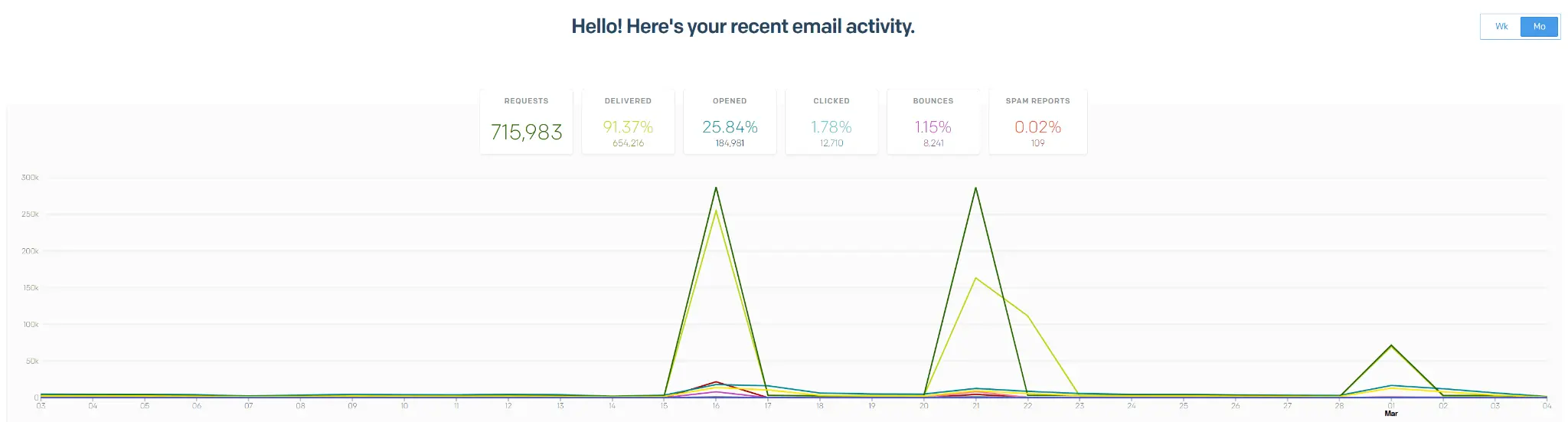
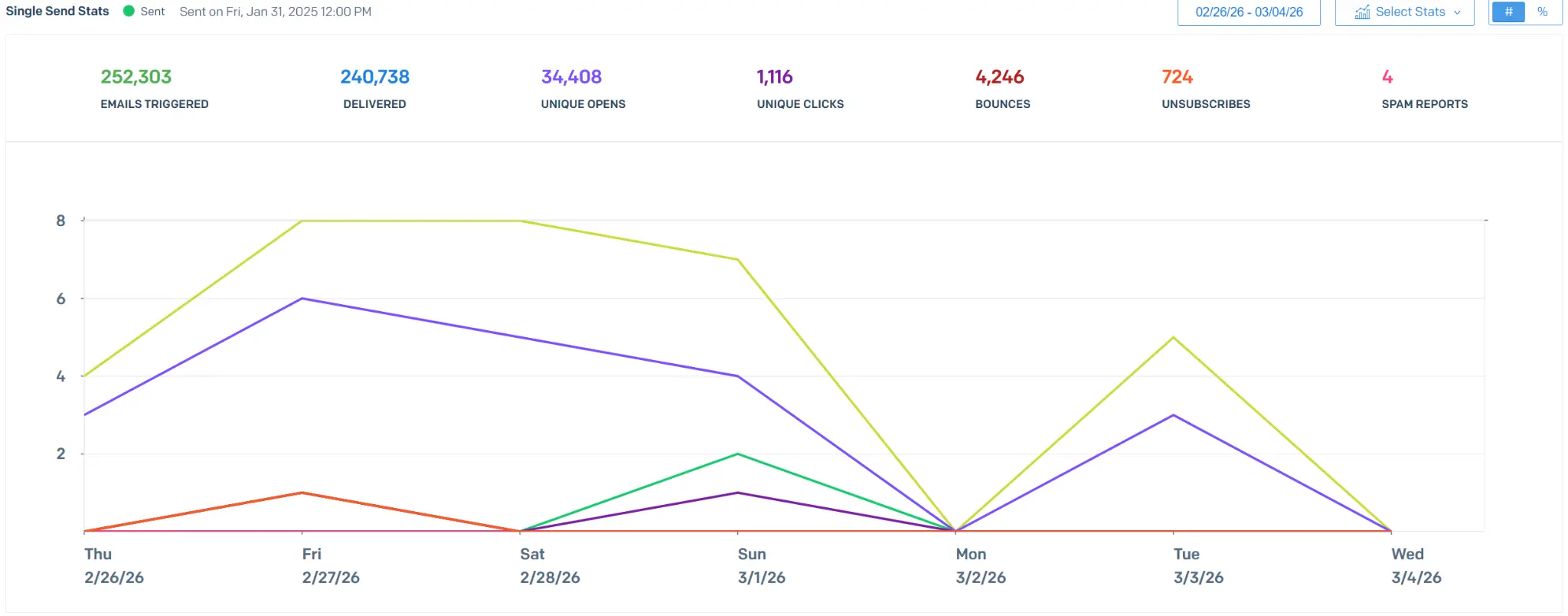
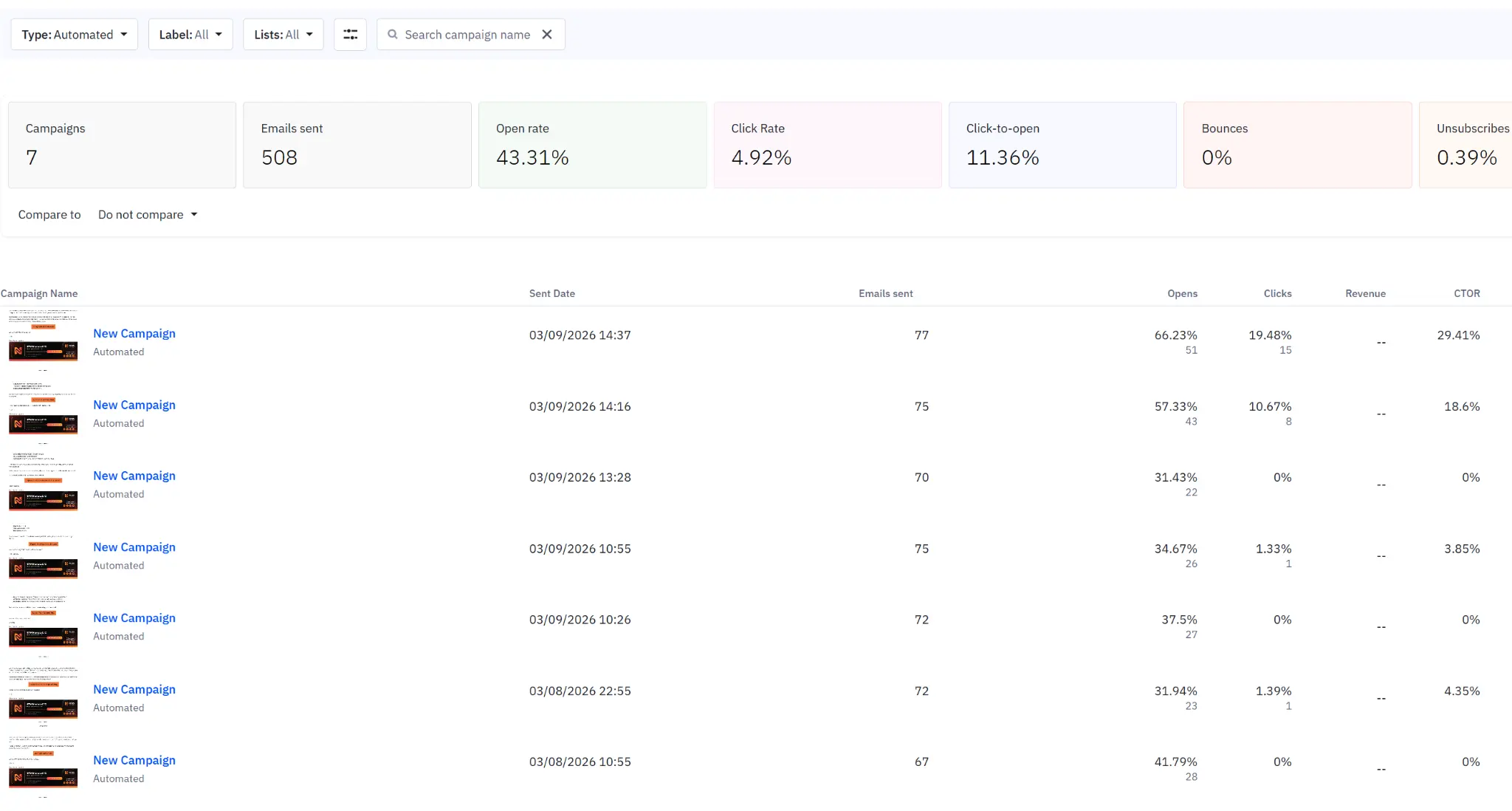
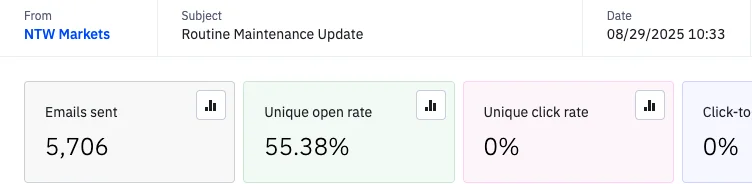
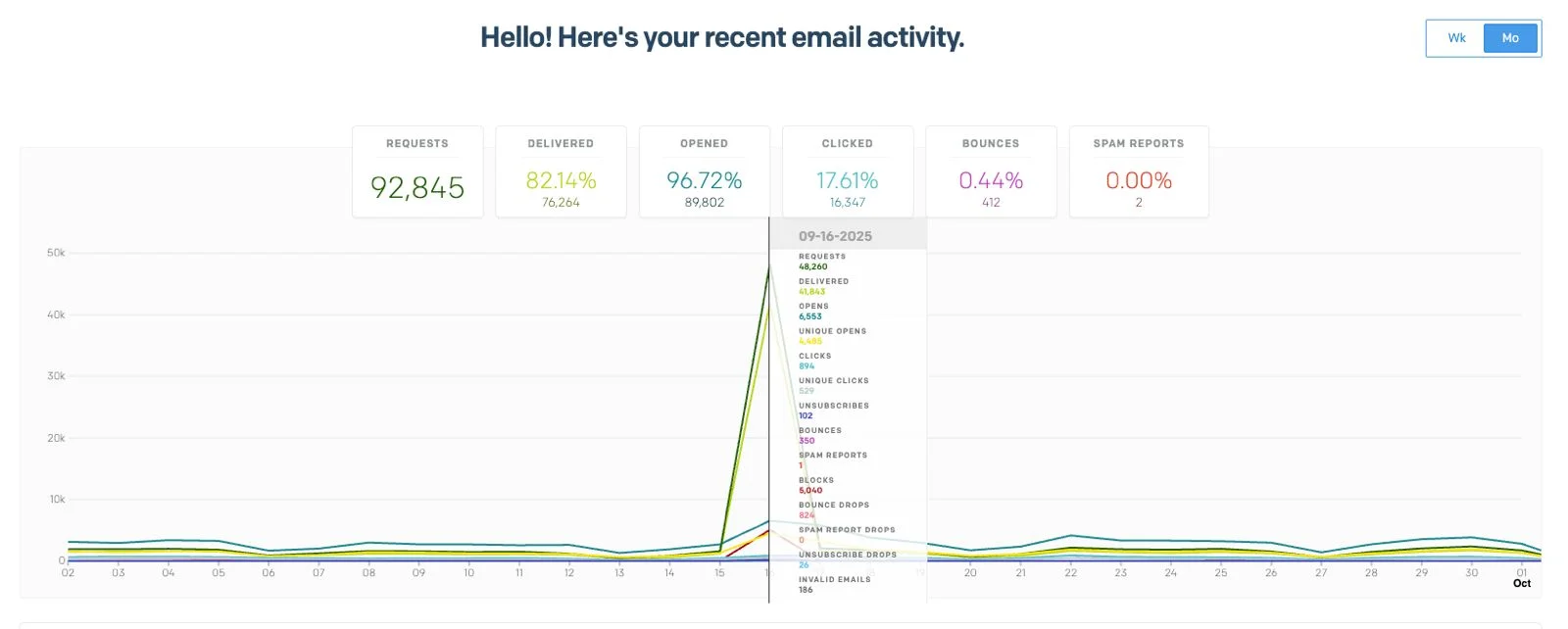
- 25%+ email open rates consistently across 300K+ contact lists
- $450K+ generated from a single campaign for a brokerage client
- 70+ automated sequences tailored to trader lifecycle events
- Full compliance integration with FCA, CySEC, and ASIC requirements built into every template
Measuring Success - CFD Broker Email Marketing KPIs
Standard email metrics like open rates and click rates tell only part of the story for email marketing for CFD companies. To truly measure the impact of your email program, you need to track metrics that tie directly to brokerage revenue.
Engagement Metrics
Track open rates, click-through rates, and click-to-open rates as baseline indicators of content quality and relevance. For CFD brokers, healthy benchmarks are 25% to 35% open rates and 3% to 5% click-through rates on marketing campaigns. Transactional and market alert emails should perform significantly higher - 40% to 60% open rates are typical.
Conversion Metrics
These are the metrics that matter most. Track KYC completions attributed to email, first deposits attributed to email, first trades attributed to email, and account upgrades attributed to email. Set up proper UTM tracking and integrate your ESP with your CRM and trading platform to build end-to-end attribution. Without this connection, you are flying blind.
Revenue Metrics
Calculate total deposits attributed to email campaigns, revenue per email sent, and customer lifetime value segmented by email engagement level. You will likely find that traders who actively engage with your emails have 30% to 50% higher lifetime value than those who do not - which makes a powerful case for continued investment in your email program.
Compliance Metrics
Track unsubscribe rates (keep below 0.3% per campaign), spam complaint rates (keep below 0.05%), and ensure 100% of emails include required regulatory disclaimers. Build automated audits that check every email for compliance elements before it sends. One non-compliant email to your entire list could trigger a regulatory inquiry.
Email marketing for CFD brokers only works when you treat it as a revenue channel with dedicated infrastructure - not an afterthought managed by a junior marketer with a Mailchimp account.
Ready to build a marketing engine that actually generates revenue?
Read more: Email Marketing for Forex Brokers - Email Marketing vs Paid Ads for Trading Companies