Every trading company - whether you run a prop firm, a forex brokerage, or a CFD platform - eventually faces the same question: should we spend money on paid ads or invest in email marketing?
The honest answer is both. But most trading companies get the ratio completely wrong.
They dump 80-90% of their marketing budget into paid ads because ads feel fast and scalable. Meanwhile, they ignore the database of traders they already have sitting in their CRM - a database that could generate hundreds of thousands in revenue with the right email infrastructure.
In this article, we break down the real costs, real ROI, and real limitations of each channel specifically for the trading industry. No generic marketing advice. Just the numbers and strategy that apply to your prop firm, brokerage, or trading education company.
If you want the short version: paid ads are great for filling the top of your funnel. Email marketing is what turns that funnel into actual revenue. The companies winning right now are the ones that figured out how to use both - in the right order, at the right ratio.
The Case for Paid Ads in the Trading Industry
Let's give paid ads their due. There are real reasons why most trading companies start here, and some of those reasons are legitimate.
Speed and Scale
Paid ads deliver results fast. You can launch a campaign on Monday and have traders signing up by Wednesday. For a new prop firm that needs to build a user base from zero, or a brokerage entering a new market, this speed matters. You are not waiting months for organic growth to compound - you are buying attention right now.
Targeting Precision
Platforms like Meta, Google, and YouTube offer sophisticated targeting. You can reach traders based on their interests, behaviors, lookalike audiences, and even retarget people who visited your pricing page but did not purchase a challenge. For trading companies with a clear ideal customer profile, this targeting capability is genuinely powerful.
Scalable Spend
If a campaign is profitable at $100/day, you can scale it to $500/day and then $2,000/day. The growth feels linear and controllable. For companies with strong unit economics and healthy margins, paid ads let you pour fuel on a working acquisition engine.
The Problems Most Trading Companies Ignore
Here is where it gets uncomfortable. The trading industry has unique challenges with paid advertising that most marketers do not talk about:
- Regulatory restrictions are brutal. Meta and Google have strict policies on financial advertising. Many trading companies - especially prop firms and forex brokers - get ads rejected, accounts suspended, or entire business manager profiles banned. One wrong word about "guaranteed returns" or "financial freedom" and your ad account is gone.
- Cost per acquisition is high and rising. In the trading niche, CPAs typically range from $200 to $500+ per acquired trader. For prop firms, that number can eat into the margins of a $50-$200 challenge fee. For brokers, you might need that trader to deposit and trade for 6-12 months before you break even on acquisition cost.
- Diminishing returns hit fast. Trading is a niche market. Once you saturate your core audience, CPAs climb and ROAS drops. Most trading companies hit this wall within 3-6 months of aggressive ad spend.
- You do not own the audience. This is the biggest problem. When you stop paying for ads, the traffic stops. Every single visitor you acquired through paid ads is rented attention. If your ad account gets banned tomorrow - and in the trading industry, this happens regularly - you lose access to your entire acquisition channel overnight.

The Case for Email Marketing for Trading Companies
Email marketing is the opposite of paid ads in almost every meaningful way. It is slower to start, but once it is built, it becomes the most reliable and profitable marketing channel a trading company can own.
You Own the Channel
Your email list is yours. No algorithm changes. No ad account bans. No platform policy updates that wipe out your reach overnight. When you build an email list of 50,000 or 300,000 traders, that asset belongs to your company. You can communicate with those traders whenever you want, for as long as you want, on your terms.
For trading companies operating in a regulatory environment where paid ad accounts get suspended regularly, this ownership is not just a nice-to-have - it is a survival mechanism.
Near-Zero Marginal Cost
Once your email marketing infrastructure is built, the cost of sending one more email is essentially zero. Whether you send to 10,000 traders or 100,000 traders, the cost difference is marginal compared to paid ads where every additional click costs real money.
Your ESP costs might run $500-$2,000/month depending on list size. Compare that to $50,000-$200,000/month in ad spend for equivalent reach and the economics become obvious.
Highest ROI of Any Digital Channel
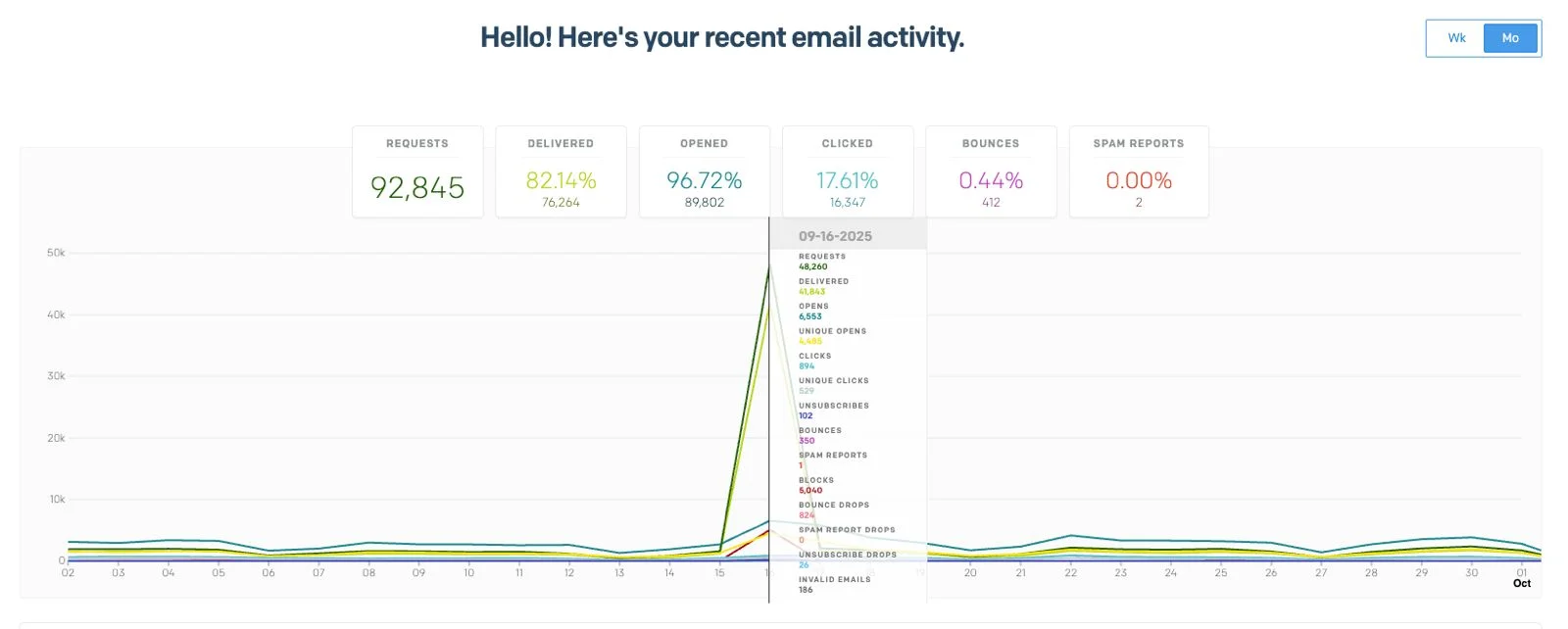
The industry average ROI for email marketing is $36 for every $1 spent. That is not a typo. No other digital marketing channel comes close to this number - not paid ads, not social media, not SEO. And for trading companies with high-value products (challenge fees, deposits, subscriptions), this ROI can be significantly higher because the revenue per conversion is substantial.
Compounds Over Time
Every month your list grows. Every automated sequence you build keeps working. Every segment you create gets more refined. Email marketing is an asset that appreciates - unlike paid ads where you start from zero every month and need to keep spending to maintain results.
A prop firm that builds 20 automated email sequences in year one still has those sequences generating revenue in year two, year three, and beyond. The work compounds. The cost stays flat.
Works With Your Existing Database
Most trading companies are sitting on massive databases of traders who signed up, tried a challenge, opened an account, or showed interest at some point. These traders already know your brand. They already gave you their contact information. And the vast majority of trading companies are doing absolutely nothing with this database.
Email marketing turns this dormant asset into active revenue. No acquisition cost. No ad spend. Just strategic communication with people who already raised their hand.
Head-to-Head Comparison: Email Marketing vs Paid Ads for Trading Companies
Let's compare the two channels across the metrics that actually matter for trading company marketing strategy:
| Factor | Email Marketing | Paid Ads |
|---|---|---|
| Cost Per Acquisition | $1-$10 per conversion (existing list) | $200-$500+ per trader |
| Customer LTV Impact | High - nurtures retention and upsells | Low - acquisition only |
| Regulatory Risk | Low - you control messaging | High - ad bans, policy changes |
| Scalability | Grows with list size (near-free) | Scales with budget (expensive) |
| Speed to Results | 2-4 weeks for infrastructure | Days for first leads |
| Audience Ownership | 100% owned | 0% owned - rented attention |
| Measurability | Open rates, clicks, revenue per send | ROAS, CPA, conversion rate |
| Compounding Effect | Strong - assets build over time | None - resets monthly |
| Compliance Flexibility | Full control over disclaimers and content | Limited by platform rules |
The pattern here is clear. Paid ads win on speed. Email wins on almost everything else - especially the metrics that determine long-term profitability for trading companies.
Want results like these for your brand?
When Paid Ads Work Best for Trading Companies
Despite the limitations, there are specific scenarios where paid advertising is the right move for your trading company marketing strategy:
Cold Acquisition for New Brands
If you just launched a prop firm and have zero users, you need paid ads to build your initial user base. You cannot send emails to a list that does not exist yet. Ads are the fastest way to go from unknown to 1,000+ traders in your ecosystem. The goal is not profitability on the ad spend itself - it is building the database that email will monetize later.
Brand Awareness in New Markets
Expanding into a new region or targeting a new trader demographic? Paid ads build awareness faster than any organic strategy. A forex brokerage entering the Southeast Asian market, for example, can use targeted YouTube and Meta ads to establish brand recognition before deploying email campaigns.
Retargeting Warm Audiences
Retargeting is where paid ads deliver the best ROI in the trading space. Someone visited your challenge pricing page but did not purchase? Retarget them. Someone watched 75% of your trading webinar ad? Retarget them. These warm audiences convert at 3-5x the rate of cold traffic, and the CPAs are significantly lower.
Time-Sensitive Promotions
Running a 48-hour flash sale on challenge fees? Launching a new trading competition with a registration deadline? Paid ads can amplify these time-sensitive offers to audiences beyond your email list. The urgency of the offer compensates for the higher acquisition cost.
When Email Marketing Wins for Trading Companies
For most trading companies, email marketing is the higher-leverage investment. Here are the specific use cases where email dominates:
Dormant Trader Reactivation
Every forex brokerage and prop firm has thousands of traders who signed up but never deposited, or purchased a challenge but never started it, or were active 6 months ago but went silent. A well-built reactivation sequence can bring 5-15% of these dormant traders back into active status - at zero acquisition cost. For a brokerage with 100,000 dormant accounts, that is 5,000-15,000 reactivated traders from a single email campaign.
Retention and Lifetime Value
Acquiring a trader costs $200-$500 through ads. But the real profit comes from keeping that trader active for months or years. Email drives retention through educational content, trading tips, product updates, community engagement, and strategic upsells. A prop firm that emails traders with weekly market analysis and challenge tips will see dramatically higher repurchase rates than one that only communicates through social media.
Product Launches to Existing Users
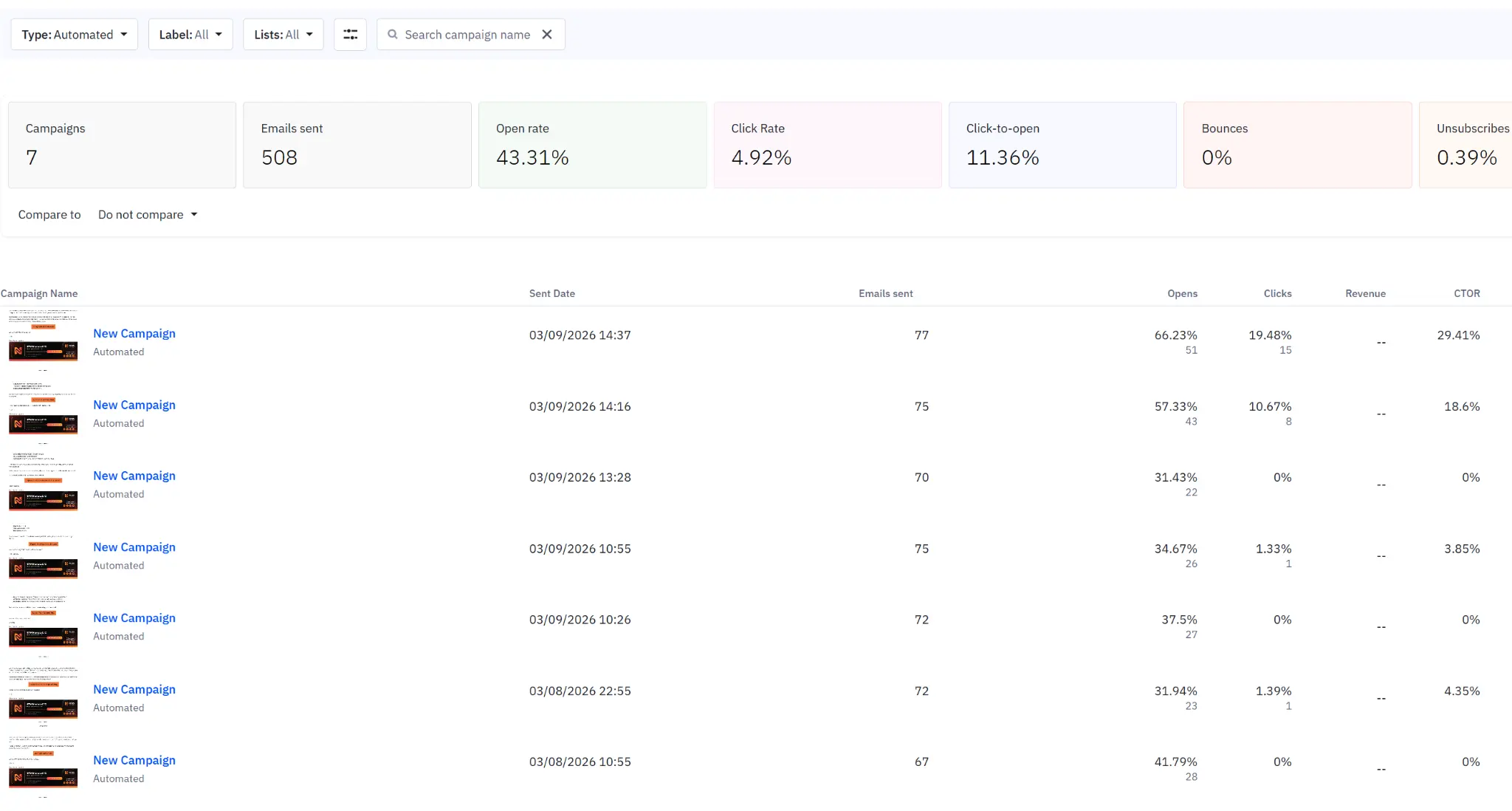
Launching a new challenge type? Introducing a new trading tool? Rolling out a VIP tier? Email is the highest-converting channel for product launches to your existing user base. These traders already trust you, already know your brand, and already gave you permission to contact them. Open rates for product launch emails to engaged segments routinely hit 35-50% in the trading niche.
Building Trust in a Low-Trust Industry
The trading industry has a trust problem. Traders are bombarded with scams, exaggerated claims, and unreliable platforms. Email allows you to build genuine relationships through consistent value delivery - educational content, transparent communication about platform updates, honest market commentary. This trust translates directly into deposits, challenge purchases, and referrals. Paid ads cannot build this depth of relationship.
Compliance-Friendly Communication
When you send emails, you control the entire message. You can include proper risk disclaimers, regulatory disclosures, and compliance-approved language without worrying about a platform rejecting your ad for mentioning "trading" or "profits." For CFD brokers and regulated financial entities, this control is essential.
The Optimal Marketing Mix for Trading Companies
The best marketing for prop firms and brokerages is not either-or. It is both channels working together in the right sequence:
Use paid ads for top-of-funnel acquisition. Use email for everything after.
Paid ads bring traders into your ecosystem. Email onboards them, educates them, converts them, retains them, upsells them, and reactivates them when they go dormant. The ad is the handshake. Email is the relationship.
Budget Split by Company Stage
Pre-launch / New company (0-5,000 traders): 70% paid ads, 30% email infrastructure. Your priority is building a list. But start building your email sequences from day one so every new lead enters a proper nurture system immediately.
Growth stage (5,000-50,000 traders): 50% paid ads, 50% email. You have a meaningful list now. Email should be generating measurable revenue from your existing database while ads continue feeding the top of funnel. Most trading companies stay in the 70/30 ads-heavy ratio far too long - this is where they leave the most money on the table.
Established (50,000+ traders): 30% paid ads, 70% email and retention. Your list is your primary revenue asset. Paid ads should focus on cold acquisition and retargeting only. The bulk of your revenue should come from strategic email campaigns to your existing database - reactivation, upsells, product launches, and retention flows.
Most trading companies we talk to are stuck in the "spend more on ads" mentality even when they have databases of 100,000+ traders. They are spending $50,000/month on acquisition while ignoring the $500,000+ in latent revenue sitting in their CRM.
AIM's Email Marketing Results (Real Numbers)
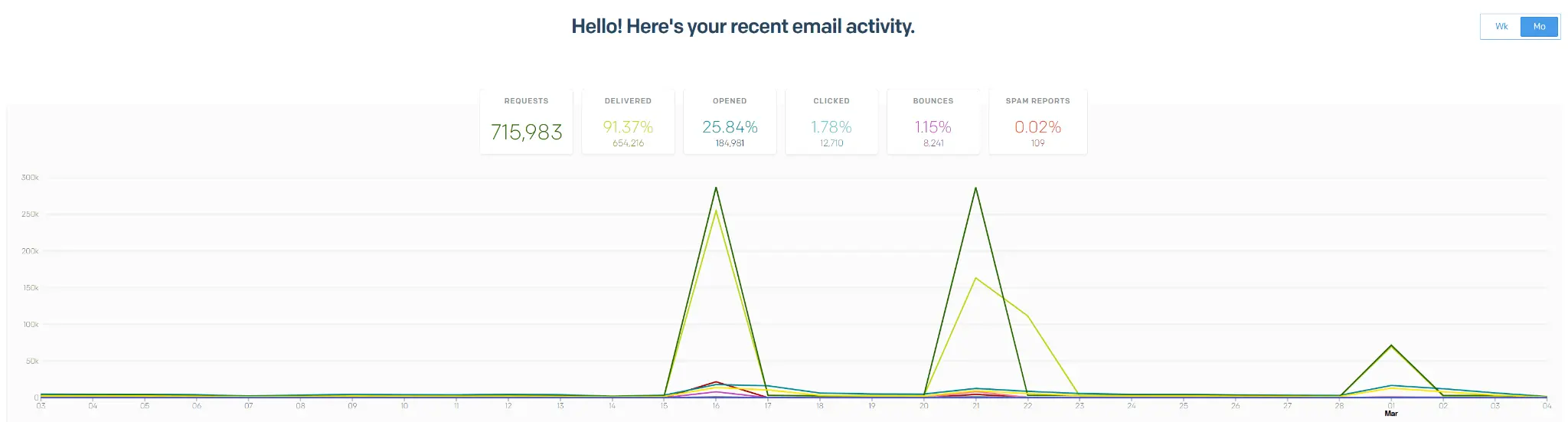
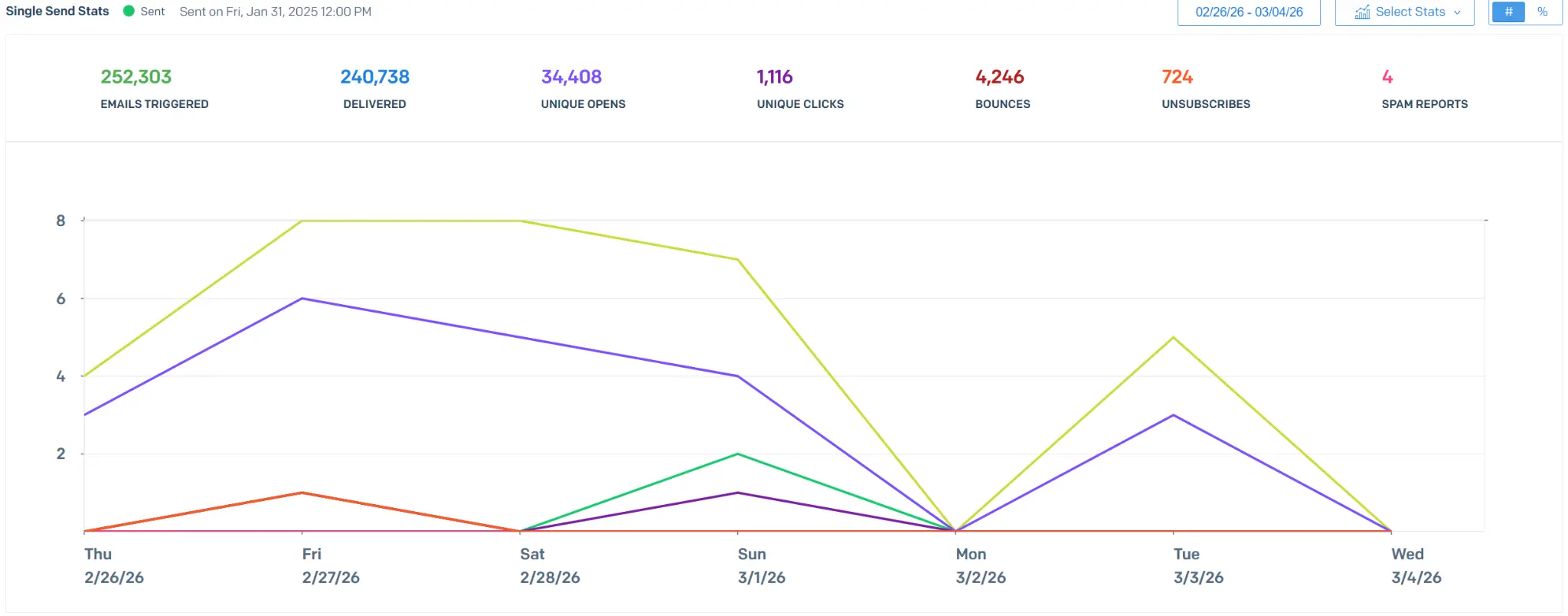
- $450K+ revenue generated from a single email campaign for a brokerage
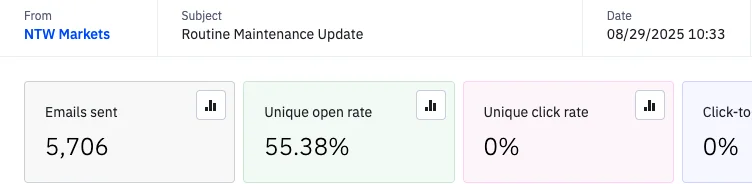
- 25%+ open rates on 300K+ contact lists (3x industry average)
- Near-zero marginal cost per email sent vs $200-500 per trader via paid ads
- 15-25% failed trader recovery through automated nurture sequences
- 26M+ organic views generated through coordinated content + email strategy
Want results like these for your brand?
Real Numbers: Email Marketing ROI for Trading Brands
Theory is nice. Numbers are better. Here are real scenarios we have seen in the trading industry (anonymized to protect client data):
Case Study 1: Brokerage Database Reactivation
A forex brokerage had a database of approximately 300,000 traders - most of whom had not logged in or deposited in over 6 months. They were spending $120,000/month on paid ads to acquire new traders while this database sat untouched.
After building segmented email campaigns targeting dormant traders with personalized reactivation sequences, the results from a single 3-email campaign:
- Emails sent: 280,000 (segmented, not a blast)
- Reactivated traders: 8,400 (3% reactivation rate)
- Average deposit from reactivated trader: $540
- Total deposits generated: $4,536,000
- Cost of email campaign: ~$2,000 (ESP costs + copywriting)
- ROI: 2,268x return on investment
Compare that to their paid ad performance during the same period: $120,000 spent, 400 new depositing traders, $216,000 in initial deposits. The email campaign generated 21x more revenue at 1.7% of the cost.
Case Study 2: Prop Firm Failed Challenge Recovery
A prop firm noticed that 70% of traders who failed their first challenge never purchased a second one. They were losing these traders permanently - traders who had already proven willingness to pay.
An automated email sequence was built specifically for failed challenge traders: empathetic messaging, trading tips based on common failure points, social proof from traders who failed then passed, and a strategic offer for a discounted retry.
- Failed challengers per month: ~2,800
- Repurchase rate before email sequence: 8%
- Repurchase rate after email sequence: 22%
- Additional monthly revenue: $58,800 (based on $150 average challenge fee)
- Annual impact: $705,600 in recovered revenue
- Cost: $0 additional ad spend - these traders were already in the database
This single automated sequence - built once, running continuously - generates more revenue per year than most prop firms spend on their entire paid ad budget.
The Cost Comparison That Should Change Your Strategy
Here is the math that matters. For a mid-size trading company:
- Paid ads budget: $50,000/month = $600,000/year
- New traders acquired via ads: ~150/month at $333 CPA = 1,800/year
- Revenue from ad-acquired traders (first year): ~$900,000
- Net ROI on ads: 1.5x (before accounting for operational costs)
Now compare:
- Email marketing investment: $5,000/month (agency + ESP) = $60,000/year
- Revenue from email campaigns: $1,200,000-$2,400,000/year (reactivation, retention, upsells)
- Net ROI on email: 20-40x
The email channel costs 10% of what paid ads cost and generates equal or greater revenue. Yet most trading companies allocate less than 5% of their marketing budget to email. The math does not make sense - and that is exactly why this represents the biggest opportunity in trading company marketing today.
What This Means for Your Trading Company
If you are running a prop firm, forex brokerage, or trading education company, here is what you should take away from this analysis:
- Do not stop running paid ads - especially if you are still building your trader base. Ads serve a purpose at the top of funnel.
- Start investing in email infrastructure now. Every day you are not emailing your database is revenue you are leaving on the table. The longer you wait, the more traders go cold and the harder they become to reactivate.
- Shift your ratio. If you are spending 90% on ads and 10% on email, flip it closer to 50/50 or even 30/70 if you have a substantial existing database.
- Build automated sequences first. Welcome series, failed challenge recovery, dormant reactivation, product launch announcements. These run 24/7 and compound over time.
- Segment everything. Do not send the same email to a trader who failed a challenge and a trader who has been funded for 6 months. Segmentation is what separates email that generates revenue from email that gets ignored.
The trading companies that will dominate their markets over the next 2-3 years are the ones that figure out the paid ads + email combination. Ads for acquisition. Email for everything else. The ones that keep dumping budget into ads while ignoring their existing database will keep paying more and more for diminishing returns.
Ready to build a marketing engine that actually generates revenue?