Most brokers judge an email by whether it got opened. The number that actually moves money is whether it got clicked. A click is a trader leaving their inbox and walking back toward your platform. On one behavioral send, a brokerage running on our system put 6,790 unique traders back in motion from a single email.
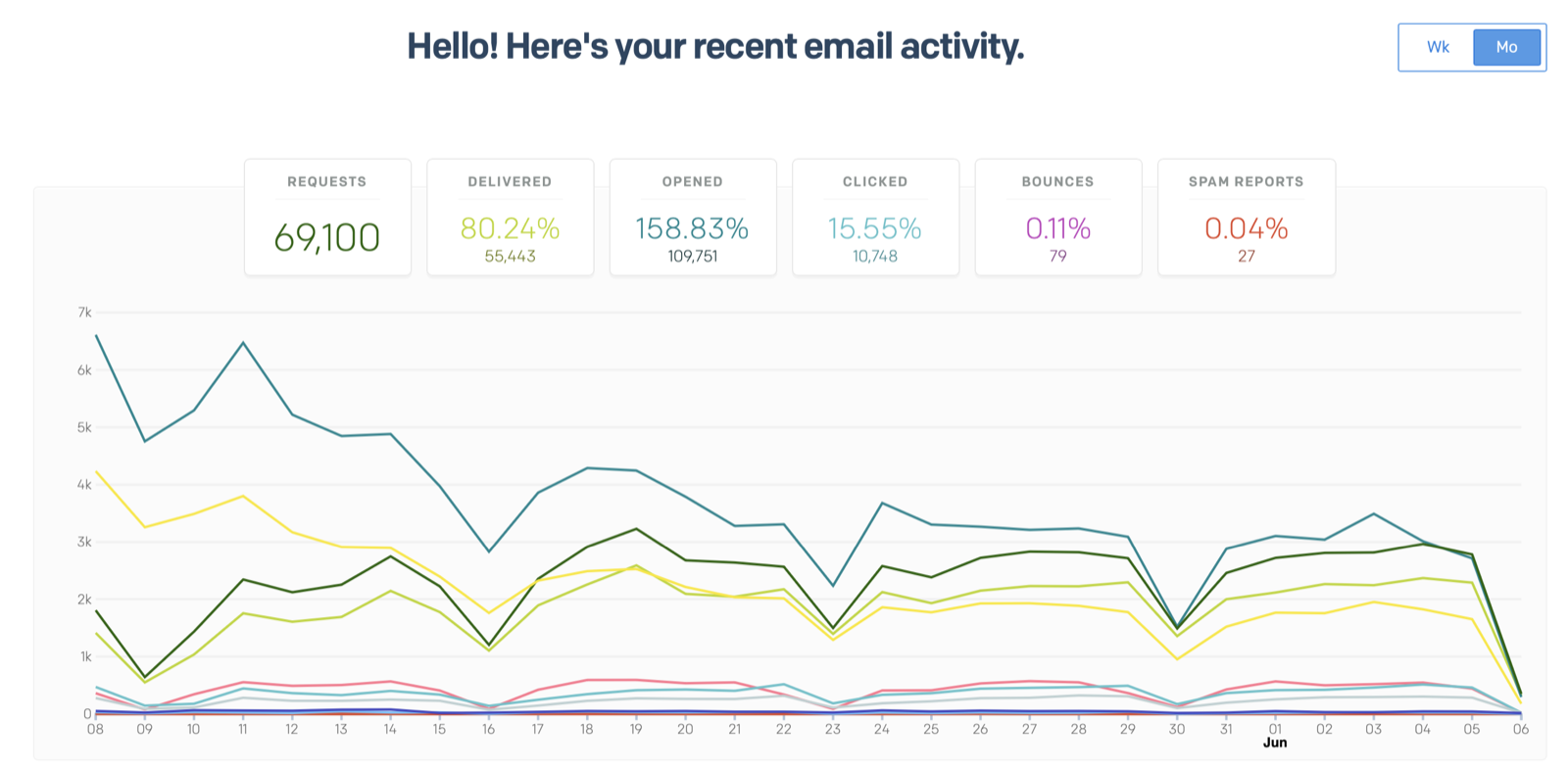
The campaign went to 69,100 traders and generated 10,748 total clicks - a 15.55% click rate - with 6,790 of those being unique clickers. Bounces sat at 0.11% and spam complaints at 0.04%. This is the breakdown of how a behavioral send produces click numbers like that, and why we build around the click instead of the open.
Clicks Are the Metric That Predicts Deposits
An open tells you a subject line worked for a second. A click tells you the trader wanted what was inside badly enough to act. For a brokerage that distinction is the whole game, because the path to a deposit runs straight through a click - back to the platform, into a promo, onto a funding page. Opens sit at the top of the funnel and leak; clicks sit one step from money.
Typical marketing email click rates hover around 2 to 3%. A send that puts 6,790 unique traders in motion against 69,100 messages is operating several times above that baseline. That gap is not luck or a better subject line. It is what happens when the message fits the person receiving it.
Why Most Broker Emails Barely Get Clicked
The default broker email is a single broadcast: the same promo, the same copy, the same call to action fired at the entire book at once. A trader who deposited last week and a trader who went quiet four months ago receive the identical message, so neither one feels spoken to and neither one clicks.
- No behavioral trigger. The send is scheduled by the calendar, not by what the trader just did. The most clickable moment - right after a login, a deposit, or a losing streak - passes untouched.
- One offer for everyone. A dormant trader who already passed KYC needs a different reason to act than a fresh signup. A single blanket offer is wrong for almost everyone it reaches.
- Generic calls to action. "Trade now" means nothing to a trader who left months ago. The click only happens when the next step is obvious and built for where that specific trader actually is.
Opens can be faked by a mail server. A click has to be made by a person. That is why we build to the click.
Inside The Retention Engine: Behavioral Sends
Inside The Retention Engine, an email is not one message to a list. It is hundreds of branching paths, and the version a trader receives is decided by what they have actually done. This is the same behavioral approach we run across our email marketing engagements.
For this send, the list was split on the data that actually predicts a click:
- Deposit history - never funded, funded once, repeat depositor, high-volume VIP, each routed to its own message.
- Lifecycle stage - new signup, active, dormant 30/60/90 days, long-inactive, so the reason to click matched the relationship.
- Login and trade recency - the closer a trader was to acting on their own, the sharper the nudge they received.
- Instrument preference - the offer referenced what that trader actually trades, not a generic headline.
Segmentation is what makes a single campaign feel personal to a list of nearly 70,000. When the message fits the trader, the trader clicks. When it does not, they archive it. Six thousand seven hundred and ninety of them clicked.
Want click numbers like these for your brokerage?
The Result: 6,790 Unique Clicks From One Send
Here is the live dashboard from the campaign:
The Numbers
- 69,100 emails sent to a behaviorally segmented trader list
- 55,443 delivered (80.24%)
- 10,748 total clicks at a 15.55% click rate
- 6,790 unique clickers - traders who took action, not just received the email
- 79 bounces (0.11%) and 27 spam complaints (0.04%)
The number that matters is the 6,790. That is 6,790 individual traders who, off one email, moved from passive inbox recipients to people actively clicking toward the platform. At broker economics, a clickthrough population that size is a meaningful deposit event, not a vanity stat.
A Note on the Open Rate
If you look closely at that same dashboard, you will see 109,751 opens recorded against 69,100 sends, which works out to 158.83% - an open rate above 100%. That is not a number we will stand behind, and we want to be straight about why. Email open tracking is unreliable by design. Apple Mail Privacy Protection auto-loads the tracking pixel whether or not a human ever looks at the message, inbox providers and security scanners prefetch images on their own, and the figure counts every re-open instead of unique people. Stack those together on a large send and the reported percentage runs past 100%.
So the open percentage on this campaign is not calculated correctly, and we will not pretend otherwise. What is correct are the events that cannot be faked by a mail server: the emails sent, the emails delivered, and above all the clicks. Those are real actions tied to real traders, which is exactly why we report on clicks and treat the open figure as the tracking artifact it is.
What This Means for Your Brokerage
If your email program is graded on opens, you are grading it on the least reliable number in the stack. Clicks map to logins, logins map to deposits, and clicks are the first point in that chain you can actually trust. A broker email that drives 6,790 unique clicks is doing the one job email has at a brokerage: putting traders back in front of the platform with a reason to act.
Getting click numbers like this is not a copywriting trick. It is behavioral infrastructure - the right message, to the right trader, at the moment they are most likely to act - sitting on top of clean deliverability that lands the send in the inbox in the first place. For that deliverability layer, see our email deliverability playbook, and for the sequence side, our prop firm email sequences.
This send is one campaign inside The Retention Engine, the 90-day system we build for brokers with at least 5,000 contacts in their CRM. The guarantee underneath it is simple: $500,000 in attributed trader deposits in 90 days, or we refund every fee.
Ready to turn the database you already own into clicks and deposits?
Frequently Asked Questions
What is a good click-through rate for a broker email?
Typical marketing email click rates sit around 2 to 3%. This send generated 10,748 total clicks and 6,790 unique clickers against 69,100 messages, well above that baseline. Clicks matter more than opens for a brokerage because a click is a trader taking action, which is the step right before a login and a deposit.
Why don't you report the open rate on this campaign?
The dashboard logged 109,751 opens against 69,100 sends, which is over 100% and not a figure we will stand behind. Open tracking is unreliable - Apple Mail Privacy Protection auto-loads tracking pixels, providers prefetch images, and totals count re-opens rather than unique people - so it inflates past what is real. The send, delivery, and click numbers are accurate, so we report on clicks.
How does behavioral sending lift clicks?
Instead of one broadcast to the whole book, the message and offer are matched to what each trader has actually done - deposit history, lifecycle stage, instrument, and login recency. Relevant mail gets clicked; generic mail gets archived. That match is what produced 6,790 unique clickers from a single send.
What does AIM need to run this for my brokerage?
A CRM with at least 5,000 contacts and access under a mutual NDA. We plug into ActiveCampaign, HubSpot, SendGrid, or your backoffice, and every campaign goes through your compliance approval before it ships. It runs inside The Retention Engine, backed by the guarantee of $500,000 in attributed deposits in 90 days or a full refund.